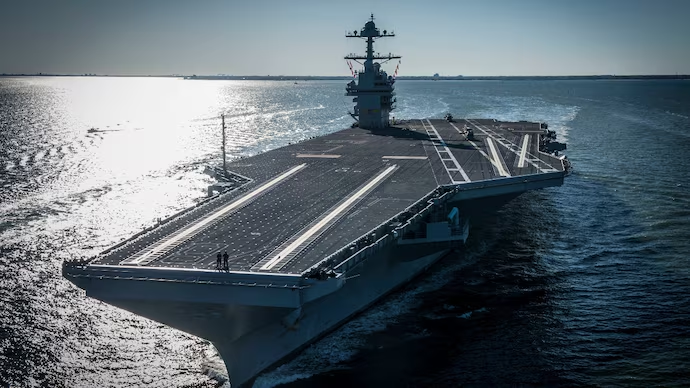
The USS Gerald R. Ford toilet crisis has emerged as an unexpected flashpoint during a period of heightened geopolitical strain between the United States and Iran. While global attention remains fixed on military strategy and deterrence in West Asia, reports of widespread sanitation failures aboard the aircraft carrier have drawn unusual public scrutiny.
The nuclear-powered carrier, USS Gerald R. Ford, is among the most advanced warships in the world. However, its cutting-edge design has been overshadowed by persistent plumbing and sewage system breakdowns affecting hundreds of onboard toilets during an extended deployment.
Sanitation Breakdown on a Strategic Asset
The USS Gerald R. Ford toilet crisis centres around the vessel’s vacuum-based waste disposal system. Unlike traditional gravity systems, this advanced mechanism relies on complex valves and pressure control. While efficient in theory, it has reportedly proven vulnerable to blockages and repeated mechanical faults.
With nearly 4,500 sailors onboard and approximately 650 toilets installed throughout the ship, system-wide disruptions have led to:
- Long restroom queues
- Increased maintenance pressure on engineering crews
- Frustration among deployed personnel
- Concerns about hygiene and morale
Although the US Navy has maintained that the vessel’s operational readiness remains intact, the sanitation crisis has highlighted the human dimension of prolonged military deployments.
Extended Deployment and Operational Pressure
The USS Gerald R. Ford toilet crisis comes amid rising tensions in the Gulf region, where the carrier has been positioned as a show of force. Military analysts view such deployments as part of broader deterrence measures linked to Iran’s regional posture and maritime security concerns.
Extended time at sea places immense strain on both mechanical systems and crew welfare. Aircraft carriers are designed for sustained operations, yet routine maintenance cycles can be disrupted during high-alert deployments. When sanitation systems falter, even the most technologically advanced warship can face basic quality-of-life challenges.
For sailors, extended tours already involve psychological stress, separation from families, and intense operational routines. The sanitation issues have added another layer of discomfort during an already demanding mission.
Strategic Symbolism vs. Human Reality
The USS Gerald R. Ford represents American naval power projection at its peak. Named after former US President Gerald Ford, the carrier incorporates advanced radar, electromagnetic aircraft launch systems, and next-generation defence capabilities.
However, the toilet crisis underscores a broader lesson: technological sophistication does not eliminate logistical vulnerabilities. In modern warfare, morale and sustainability are as critical as firepower.
Military experts note that prolonged deployments without sufficient downtime for repairs can gradually erode crew efficiency. Even if mission capability remains unaffected, everyday hardships can influence long-term readiness.
Geopolitical Context
The USS Gerald R. Ford toilet crisis is unfolding against a backdrop of US–Iran strategic friction. The presence of an American carrier strike group in the region serves as both deterrence and diplomatic signalling.
Yet the sanitation issue has unexpectedly shifted part of the narrative from high-level strategy to onboard living conditions. It illustrates how operational realities can intersect with geopolitical tensions in unpredictable ways.
While no direct operational compromise has been reported, the incident raises broader questions about:
- Sustainability of extended naval deployments
- Maintenance planning during crisis situations
- Balancing deterrence posture with crew welfare
Conclusion
The USS Gerald R. Ford toilet crisis may appear minor in the context of international security, but it highlights a significant truth about modern military operations: readiness extends beyond weapon systems to include infrastructure reliability and crew well-being.
As tensions with Iran continue to shape US naval posture in West Asia, the incident serves as a reminder that even the world’s most advanced warships depend on fundamental systems functioning smoothly.
In an era defined by strategic rivalry and high-tech defence platforms, sometimes the most basic operational challenges can make the strongest headlines.
FOR MORE BLOGS – beyondthepunchlines.com

Author: Nitin mittal
CA by qualification

 Add to favorites