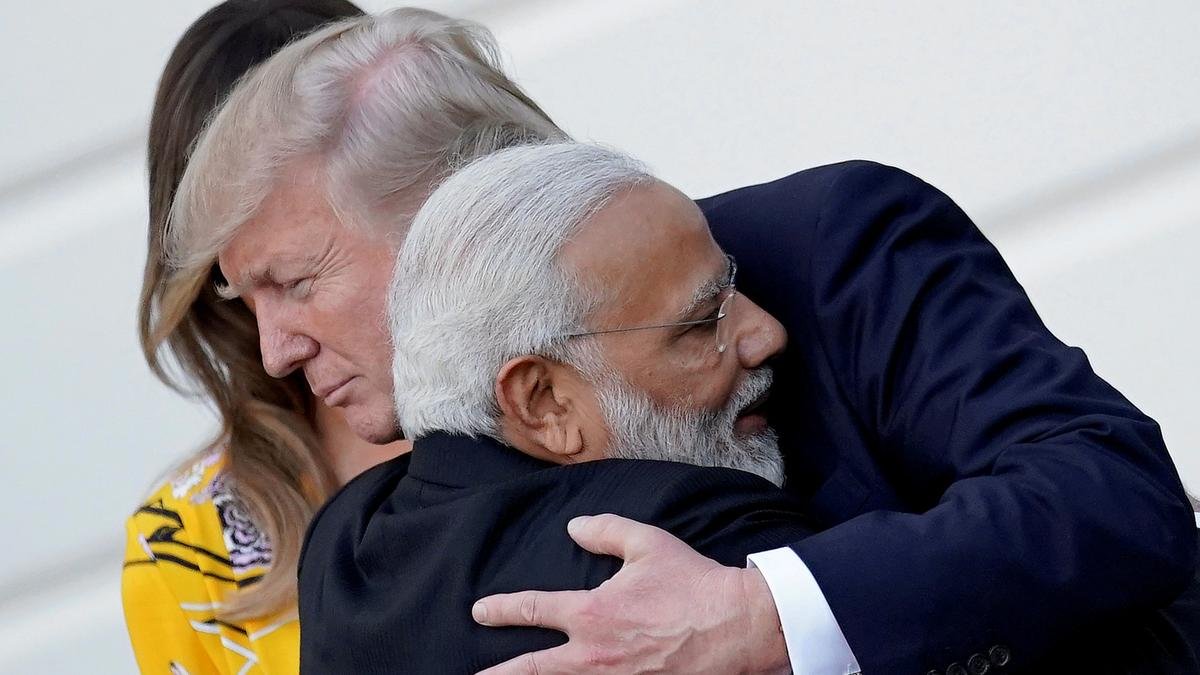
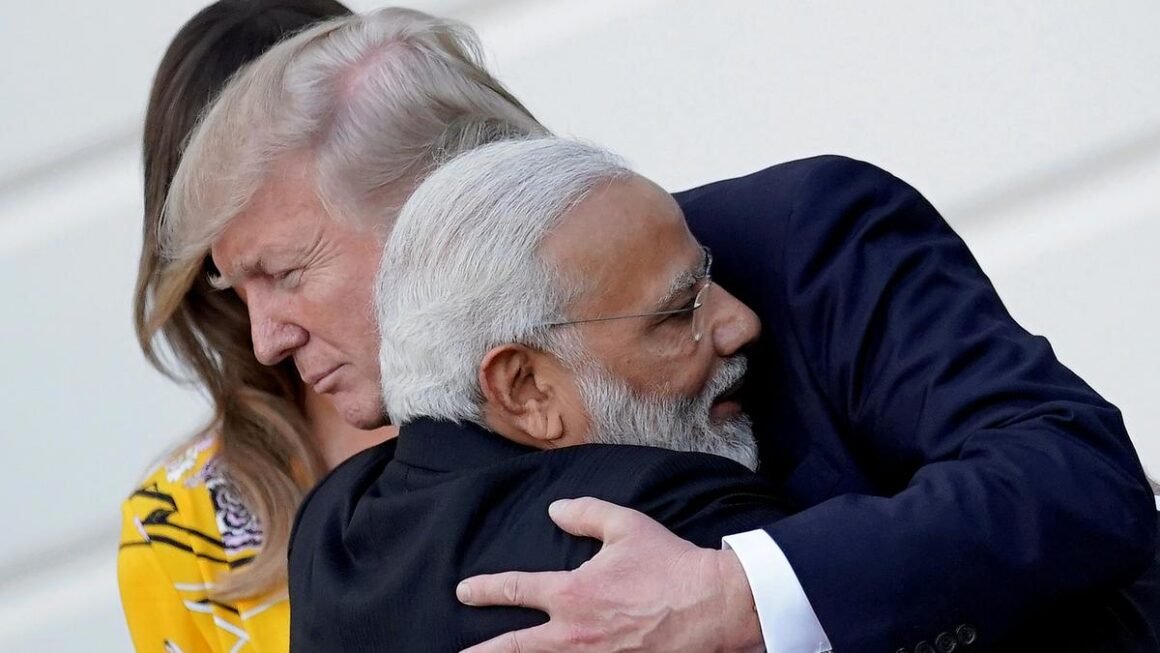
Punchline: Trump Modi friendship stays warm, but trade winds blow cold — the India-U.S. equation is as complex as it is crucial.
The Assurance of Trump Modi friendship
In a statement that carried both reassurance and subtle caution, U.S. President Donald Trump declared that he would “strengthen the Trump-Modi friendship” with Prime Minister Narendra Modi. Calling the India–U.S. bond “very special”, Trump underlined that there was “nothing to worry” about the Trump-Modi friendship between the world’s two largest democracies. His words seemed designed to calm anxieties in New Delhi and Washington at a time when bilateral trade tensions have cast shadows over the partnership.
The personal rapport between Modi and Trump has often been showcased as a cornerstone of India–U.S. ties. From the Howdy Modi event in Houston in 2019 to Modi’s state visit to Washington, both leaders have presented their friendship as symbolic of the deeper strategic alignment between the two nations.
The Trade and Tariff Flashpoint
Yet, behind the warm words lies a growing strain. Trump’s administration recently doubled tariffs on Indian goods from 25% to 50%, citing New Delhi’s continued purchase of Russian oil and arms. The move has sparked criticism from both Indian policymakers and global observers who warn it risks undoing decades of progress in bilateral trade and cooperation.
While Trump emphasized friendship, he didn’t shy away from pointing out his “disappointment” over Modi’s decisions. India, for its part, has defended its stance, citing energy security and strategic autonomy as guiding principles.
Modi’s Reciprocal Response
Prime Minister Modi responded almost instantly, affirming that he “fully reciprocates” Trump’s sentiments. Modi stressed that India and the U.S. enjoy a comprehensive and global strategic partnership, one that extends beyond mere trade disputes. His tone suggested that New Delhi seeks to keep the long-term vision of cooperation intact, even if short-term irritants exist.
This diplomatic balancing act is crucial for India, which finds itself navigating between the demands of great power politics, its reliance on Russian energy, and its deepening security ties with the U.S.
What’s Really at Stake?
The stakes are high. The U.S. is one of India’s largest trading partners, while India remains a critical counterbalance in Washington’s Indo-Pacific strategy against China. Disruptions in this relationship ripple far beyond economics — they affect global supply chains, regional security, and international diplomacy.
At the same time, India’s refusal to fall neatly into one camp underscores its growing role as a civilizational power that charts its own path. For New Delhi, friendships may be personal, but national interest always comes first.
Looking Ahead
Whether this latest episode turns into a long-term rift or a short-lived diplomatic tussle will depend on how both sides manage their contradictions. Trump’s reassurance suggests he is willing to keep the doors open, but the tariffs and oil politics indicate that friendship alone cannot carry the relationship forward.
Key Watchpoints:
- Will Washington ease tariffs to rebuild confidence?
- Can India diversify energy sources without jeopardizing growth?
- Will strategic dialogue overcome transactional irritants?
Conclusion
The India–U.S. relationship has always been a mix of personal diplomacy, strategic necessity, and occasional clashes. Trump’s remarks that he will “always be friends” with Modi may soothe nerves for now, but the test of this friendship lies in whether both nations can align policy with rhetoric.
Friendship may provide warmth, but only mutual respect for sovereignty and strategy will sustain the fire.
FOR MORE BLOGS – beyondthepunchlines.com

Author: Team BTP

 Add to favorites