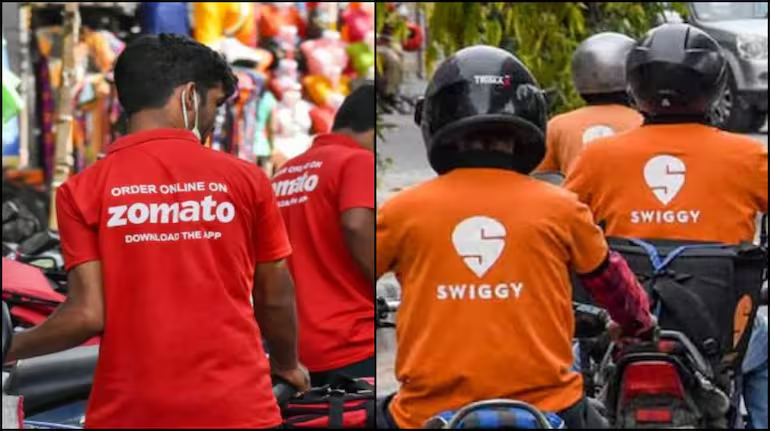
Swiggy Zomato delivery strike: When convenience comes at the cost of dignity, workers push back — and millions of New Year’s Eve could feel the impact.
As India gears up to welcome New Year’s Eve 2025, millions of consumers eagerly planning parties and family gatherings may face significant disruptions in food delivery and quick-commerce services. A nationwide strike by gig and delivery workers threatens to halt or slow operations for platforms like Swiggy, Zomato, Blinkit, Zepto, Amazon, and Flipkart. Delivery partners in multiple cities have been instructed to log off apps or sharply reduce work hours, potentially affecting thousands of orders on the busiest night of the year.
Why the Strike Is Happening
The Swiggy Zomato delivery strike is spearheaded by the Gig and Platform Services Workers Union (GIPSWU) and supported by regional affiliates across India. Workers are demanding improved working conditions, job security, fair pay, and legal recognition, arguing that being classified as “partners” rather than employees deprives them of basic labour protections, health benefits, and social security.
With high participation, consumers could experience delays, missed orders, or limited delivery slots, directly impacting New Year’s Eve celebrations and corporate catering plans.
Core Demands of Delivery Workers
Unions have outlined several key demands aimed at improving earnings, safety, and dignity for service partners:
- Minimum monthly income guarantee, suggested around ₹40,000 per month
- Reduction of high-pressure delivery systems such as 10-minute slot or hyperlocal targets
- Fairer pay structures, per-kilometer rates, and transparent incentive systems
- Elimination of arbitrary account blocks, ratings-based punishments, and unfair penalties
- Recognition under labour law, ensuring legal protections, social security, and workplace safety
The strike follows an earlier flash strike on December 25, which workers claim did not result in meaningful change, prompting renewed action on December 31.
Potential Impact on New Year’s Eve
With an estimated 100,000–150,000 delivery workers participating nationwide, services may slow or become unavailable in major cities. Delivery platforms have tried short-term incentive schemes, including higher per-order earnings and waived penalties, but unions stress that these measures do not address systemic structural issues in the gig economy.
Consumers planning last-minute food, grocery, or quick-commerce orders are advised to plan ahead, as disruptions may cause delays or cancellations, especially during peak evening hours.
Broader Implications for the Gig Economy
The Swiggy Zomato delivery strike sheds light on systemic issues in India’s gig economy, highlighting the lack of job security, legal recognition, and worker protections for millions of delivery partners. It underscores the urgent need for policy reforms, labour law adjustments, and long-term strategies to ensure fair treatment, safety, and dignity for gig workers, who are critical to urban service ecosystems.
How Consumers Can Prepare: Swiggy Zomato delivery strike
To avoid inconvenience on New Year’s Eve, customers are advised to place orders early, confirm delivery times, and consider alternative arrangements. This strike also serves as a wake-up call about the importance of fair labour practices in the gig economy and how they directly affect consumer convenience and urban life.
In conclusion, the New Year’s Eve strike by delivery workers is not just about disrupting services—it is a powerful statement demanding fairness, legal recognition, and dignity for millions of gig workers across India. Consumers, companies, and policymakers must take note, as the outcome may reshape the future of India’s app-based delivery ecosystem.
FOR MORE BLOGS – beyondthepunchlines.com

Author: Team BTP

 Add to favorites