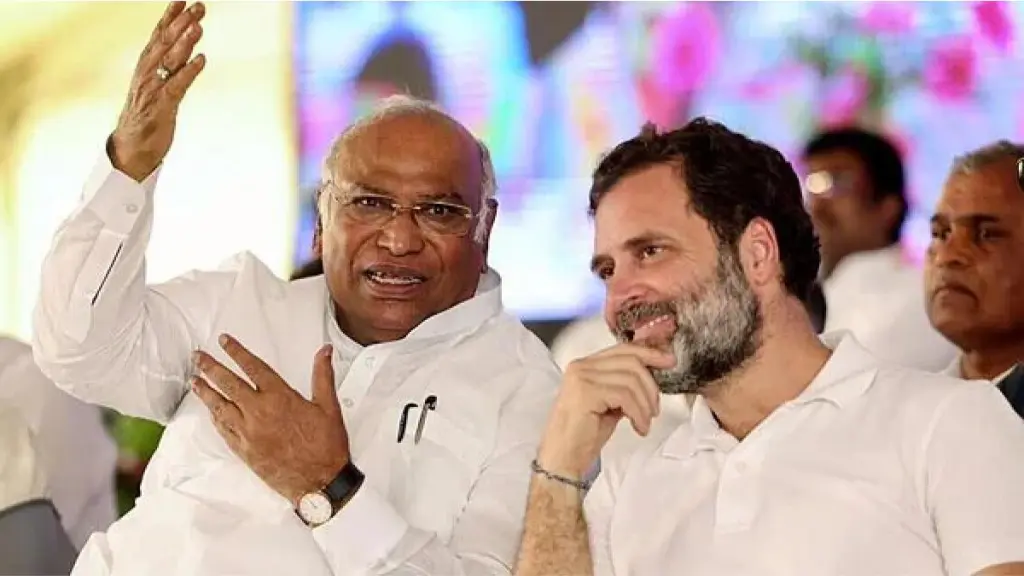
India’s 78th Independence Day should’ve united the country in celebration—but instead, it ignited a political firestorm. As Prime Minister Narendra Modi hoisted the tricolor at the historic Red Fort and delivered what may be his final I-Day speech before the 2026 general elections, two of India’s top opposition leaders—Rahul Gandhi and Mallikarjun Kharge—were nowhere to be seen.
Their absence wasn’t just noticed—the BJP seized upon it as a calculated insult. And not just to the Prime Minister, but to the very soul of the nation, especially in the wake of the widely celebrated military operation: Operation Sindoor. What followed was a blistering wave of political attacks, media debates, and digital outrage—a controversy that hasn’t cooled off yet.
So, what exactly happened? Why does it matter? And what does it reveal about India’s deeply polarized political environment ahead of the 2026 elections?
Rahul Gandhi and Kharge Skip Red Fort: A Silent Boycott That Spoke Volumes
On August 15, 2025, in the morning, Prime Minister Narendra Modi made his Independence Day speech at the Red Fort before the country. But there were two stark omissions in the front row—Mallikarjun Kharge, the Leader of the Opposition in the Rajya Sabha, and Rahul Gandhi, Congress MP and one of the leading faces of opposition.
Rather than joining the formal national celebration, Kharge raised the flag at Indira Bhawan, the Delhi Congress headquarters. Rahul Gandhi, on the other hand, was occupied in Uttar Pradesh, where he was carrying forward his Bharat Jodo Nyay Yatra 2.0, a mass contact campaign among farmers, workers, and rural folk.
Their decision to skip the Red Fort event wasn’t due to illness or scheduling conflict. It was a political move—a boycott meant to send a message, according to the BJP—and one that quickly turned the spotlight from Modi’s speech to the opposition’s absence.
BJP Erupts: “You Disrespected the Soldiers and the Nation”
The BJP came down hard. Within hours, top party leaders accused Congress of “insulting the Indian Army”, “disrespecting national pride,” and “mocking Operation Sindoor”, which had been a key highlight of Modi’s address.
BJP’s Main Allegations:
- Congress insulted Operation Sindoor by not being present when Modi paid tribute to the armed forces.
- The boycott follows a “pattern of disrespect” shown by Congress towards national symbols, events, and the Prime Minister.
- By choosing their flag-hoisting and outreach, Congress “put party over country.”
Amit Malviya, head of the BJP’s IT Cell, tweeted:
“Skipping the national celebration on a day dedicated to our soldiers and freedom is a disgrace. This is not just arrogance. It’s treachery.”
Smriti Irani added:
“Congress refuses to honor our brave soldiers because they can’t stand India succeeding under Modi.”
Why Operation Sindoor Became the Focal Point of Political Rage
Operation Sindoor was no routine mission. It was a high-risk military operation conducted in July 2025 in Jammu & Kashmir. The Indian Army carried out rescue missions in militant-heavy zones, evacuated hostages, and neutralized multiple terror cells near the Line of Control.
The success of Operation Sindoor became a symbol of India’s military dominance, and the BJP wrapped it tightly into the narrative of national pride. PM Modi’s speech centered around this operation, highlighting the bravery of Indian soldiers and calling it an example of “New India’s resolve.”
So, when Congress’s top brass skipped the event, the BJP claimed it wasn’t just a political absence—it was a direct insult to India’s armed forces.C4
Congress Strikes Back: “This Day Belongs to India, Not to One Leader”
Congress didn’t take the accusations lightly—and responded just as forcefully.
- Mallikarjun Kharge defended his alternate celebration, saying that “the spirit of Independence Day isn’t tied to any one venue or individual.”
- Rahul Gandhi, speaking to farmers in rural UP, declared:
“True freedom is about justice, jobs, dignity—not soundbites from podiums. We were with the people.” - Jairam Ramesh slammed the BJP for “weaponizing nationalism” and called their reaction a “manufactured distraction” from real issues like unemployment, inflation, and social injustice.
Congress’s position is clear: patriotism isn’t performative. It’s not about standing beside the Prime Minister—it’s about standing with the people.
Timeline of the Controversy: What Happened?
Here’s how the events unfolded, factually:
- Official invites were sent to both Kharge and Rahul Gandhi by the Prime Minister’s Office.
- Neither leader attended the Red Fort ceremony. No formal explanation was offered in advance.
- PM Modi’s speech heavily focused on Operation Sindoor, praising the military and appealing to patriotic sentiments.
- BJP accused Congress of disrespecting both the event and the army.
- Congress leaders held parallel events and insisted that Independence Day isn’t about location—but intention.
- Public opinion fractured, sparking online wars, hashtags, debates, and political posturing from both camps.
What the Public Thought: A Nation Divided Across Platforms and Perspectives
The controversy quickly spilled into public discourse, both online and offline.
Voices from the Street and Social Media:
- “How can they skip Independence Day? That’s not protest—it’s insult.”
- “This day belongs to India, not to Modi. Kharge and Rahul showed integrity.”
- “Standing with farmers in a village is more patriotic than standing at Red Fort for optics.”
- “Skipping the PM’s speech during Operation Sindoor tributes? Completely tone-deaf.”
Trending hashtags on X (formerly Twitter) included:
- #DisrespectToSindoor
- #BoycottCongress
- #IStandWithRahul
- #IndependenceDayHijacked
Not the First Time: National Ceremonies as Political Chess Moves
If you think this is a new trend, it’s not. Both the BJP and the Congress have weaponized national occasions before.
Flashpoints from the Past:
- 2019 – Opposition leaders skipped Modi’s swearing-in ceremony.
- 2023 – Congress boycotted the G20 Presidential Dinner.
- Multiple instances between 2021 and 2024 saw walkouts during Republic Day, Parliament sessions, and key speeches.
National events in India are no longer just symbolic—they’re strategic.
Two Very Different Versions of Patriotism Are at War
This clash is more than about attendance. It’s about the definition of patriotism in modern India.
| BJP’s Narrative | Congress’s Narrative |
| Patriotism = Honoring military success, standing with the flag, and unity under PM Modi. | Patriotism = Defending the Constitution, grassroots justice, and challenging central power. |
| Operation Sindoor = National moment that demands national presence. | Operation Sindoor = Important, but not a political marketing tool. |
| Absence = Disrespect to the nation and the army. | Absence = Peaceful protest against a monopolized narrative. |
Final Word: A Day That Should’ve United the Nation Turned Into a Political Fault Line
Independence Day is meant to be above party politics—a moment to reflect on freedom, sacrifice, and shared identity. But in 2025, it became the latest symbolic battleground in India’s ongoing political war.
Did Congress make a bold move that challenges authoritarian spectacle?
Or did they disrespect national pride and unity?
Either way, one thing is clear: in today’s India, even patriotism is partisan.
As we inch closer to the 2026 elections, expect many more national platforms to be drawn into the fight—not for freedom, but for control of the national narrative.
FOR MORE BLOGS – beyondthepunchlines.com

Author: Anjali Pandey

 Add to favorites