When digital walls go up, the voices of a generation refuse to be silenced.
The Spark: Social Media Ban in Nepal
Nepal erupted into chaos after the government’s sudden decision to block 26 social media platforms, including Facebook, X, YouTube, Instagram, and WhatsApp. Officials claimed the move was necessary as these platforms failed to register locally under new rules.
However, the sweeping ban left millions of young people without their primary spaces for communication, activism, and expression. Only a handful of apps like TikTok and Viber remain accessible, but for Gen Z, the clampdown felt like a direct assault on their identity and freedom.
Streets Flooded with Protestors
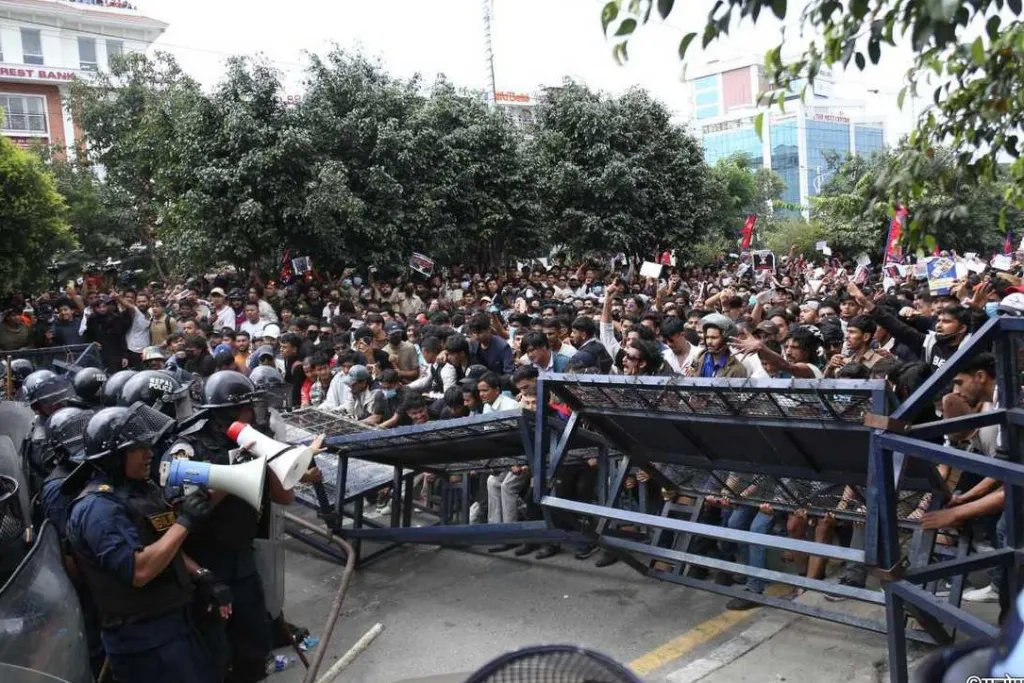
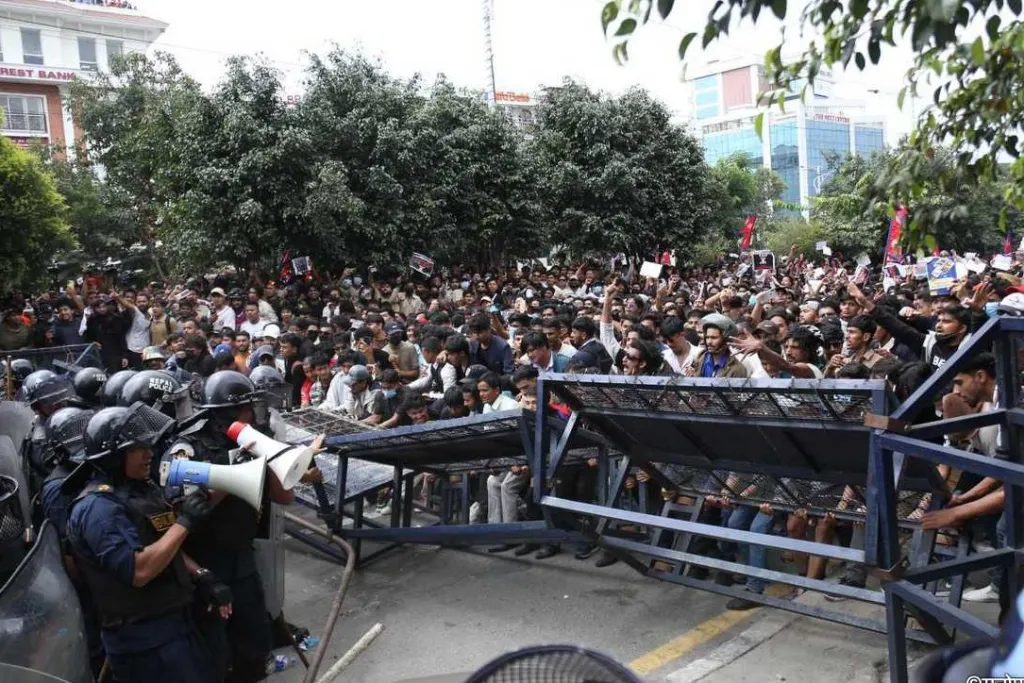
Within hours, Kathmandu’s streets were taken over by angry crowds—mostly led by Gen Z students and young professionals who consider digital rights inseparable from civil rights. Protestors carried placards, chanted slogans for freedom of expression, and attempted to march toward Parliament. The demonstrations quickly escalated as police clashed with crowds in New Baneshwar and outside Singha Durbar, the heart of Nepal’s government machinery.
Violence and Bloodshed
The confrontation turned deadly when security forces resorted to tear gas, water cannons, rubber bullets, and eventually live ammunition to disperse the crowds. At least 8 protestors were killed, with dozens more injured. Hospitals in Kathmandu reported being overwhelmed with cases of gunshot wounds and respiratory distress from tear gas exposure. For many, the violence underscored just how fragile Nepal’s democratic freedoms remain.
Curfew and Army Deployed
As the situation spiraled out of control, the government declared an emergency curfew in central Kathmandu and called in the Nepal Army to assist police. Armored vehicles and soldiers patrolled sensitive zones including Parliament, Singha Durbar, and key government buildings. The deployment sent shockwaves through the nation, drawing criticism that the state was treating its youth as enemies rather than citizens.
Gen Z’s Fight for Digital Freedom
The protests are more than just a reaction to blocked apps—they represent a generational uprising. For Nepal’s Gen Z, digital platforms are not luxuries but lifelines: tools for education, networking, employment, and political activism. The ban has been interpreted as an attack on these freedoms, igniting a broader conversation about censorship, democracy, and the right to be heard.
International Reactions
Neighboring countries and international rights groups are closely watching the developments. Organizations like Amnesty International have condemned the ban and the state’s violent response, calling it a serious violation of human rights. Analysts warn that Nepal’s crackdown could invite diplomatic criticism and even economic repercussions if instability persists.
Conclusion: A Nation at a Crossroads
Nepal now stands at a critical juncture. The government’s attempt to control digital spaces has instead ignited a nationwide rebellion, exposing deep fault lines between authority and youth. As the death toll rises and soldiers take positions in the capital, the question remains: Will Nepal double down on censorship, or will it listen to its youngest citizens demanding freedom in the digital age? One thing is clear—Gen Z is not backing down, and the world is watching.
FOR MORE BLOGS – beyondthepunchlines.com

Author: Team BTP

 Add to favorites