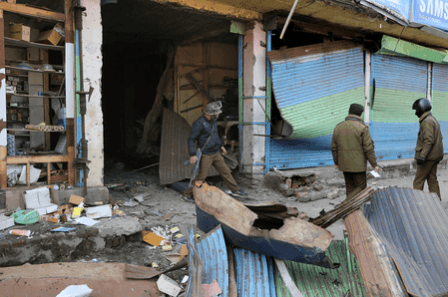
J&K Police Station Blast – Bodies Found 300m Away in a midnight explosion that shook Srinagar, shattered protocol, and exposed a dangerous gap in India’s terror-handling machinery.
On November 14, 2025, a devastating blast ripped through the Nowgam Police Station in Srinagar, killing at least 9 people and injuring over 30, including police officers, forensic experts, and civilians. Video footage emerging from the scene shows the horrifying scale of destruction—flames shooting into the night sky, debris scattered across a wide radius, and body parts reportedly found over 300 metres away from the epicentre.
The explosion occurred while officials were examining a massive cache of explosives seized from a Faridabad-based terror module linked to PAFF, a Jaish-e-Mohammed proxy outfit. Reports indicate that the seized material weighed around 350-360 kg, making it one of the largest accidental detonations in recent memory.
A Blast Powerful Enough To Flatten A Building
Eyewitness videos reveal vehicles charred beyond recognition and parts of the police station’s structure collapsed entirely. Residents living several kilometres away felt the tremors. The magnitude of the blast raised immediate concerns about why such a large quantity of high-risk explosives was being inspected inside a police station—rather than at a secured demolition site or remote testing ground.
What Exactly Went Wrong?
Authorities suspect an accidental chain reaction, but the possibility of a triggered detonation has not been ruled out. The explosives were tied to a terror investigation spanning Kashmir, Delhi NCR, and Faridabad. A mishandling of detonators or unstable material could have caused the catastrophic blast. Investigators are examining:
- Whether proper safety protocols were followed
- Why the explosives weren’t moved to an isolated testing area
- Whether a deliberate sabotage attempt occurred
- Why officers and forensic teams were positioned so close to the explosive cache
The Terror Connection: J&K police station blast
The explosives had been recovered from a module believed to be preparing attacks in Delhi and Jammu & Kashmir. The key suspect, arrested days earlier, had allegedly transported the material across states. With the police station blast, investigators fear that crucial forensic evidence may now be lost, potentially impacting ongoing counter‑terror probes.
Fire, Chaos And A Night Of Panic
Local residents described an unending roar, followed by the sound of collapsing structures and screams. Firefighters battled the blaze for hours as rescue teams recovered badly mutilated bodies, many of which were thrown hundreds of metres away due to the blast’s massive force. Drone footage captured the flattened building and crater-like impact zone.
A Wake-Up Call For India’s Security Protocols
This incident exposes serious lapses: J&K police station blast
- Why was volatile explosive material stored in a busy police station?
- Why were officers handling such dangerous evidence without remote-trigger tools?
- Did the authorities underestimate the volume and sensitivity of the explosives?
For a region already sensitive to terror threats, such negligence can erode public trust and compromise national security.
Political Reactions: J&K police station blast
The blast has triggered strong reactions from political leaders across the spectrum. While the J&K administration has promised a high-level probe, critics argue that this was a preventable tragedy. Some are demanding accountability for procedural lapses that cost lives.
Conclusion: J&K police station blast
The Nowgam police station blast is more than a tragic accident—it is a glaring reminder of how India handles terror-linked evidence. The sheer power of the explosion, the staggering distance bodies were thrown, and the destruction captured on camera all point to one truth: this was a failure of protocols, not just fate.
As investigations widen, the government faces pressure to reform explosive-handling guidelines, strengthen forensic protocols, and ensure that such an avoidable tragedy never repeats itself.
FOR MORE BLOGS – beyondthepunchlines.com

Author: Team BTP

 Add to favorites