Jan Suraaj Party’s Bihar election- A high-profile debut meets a harsh electoral reality.
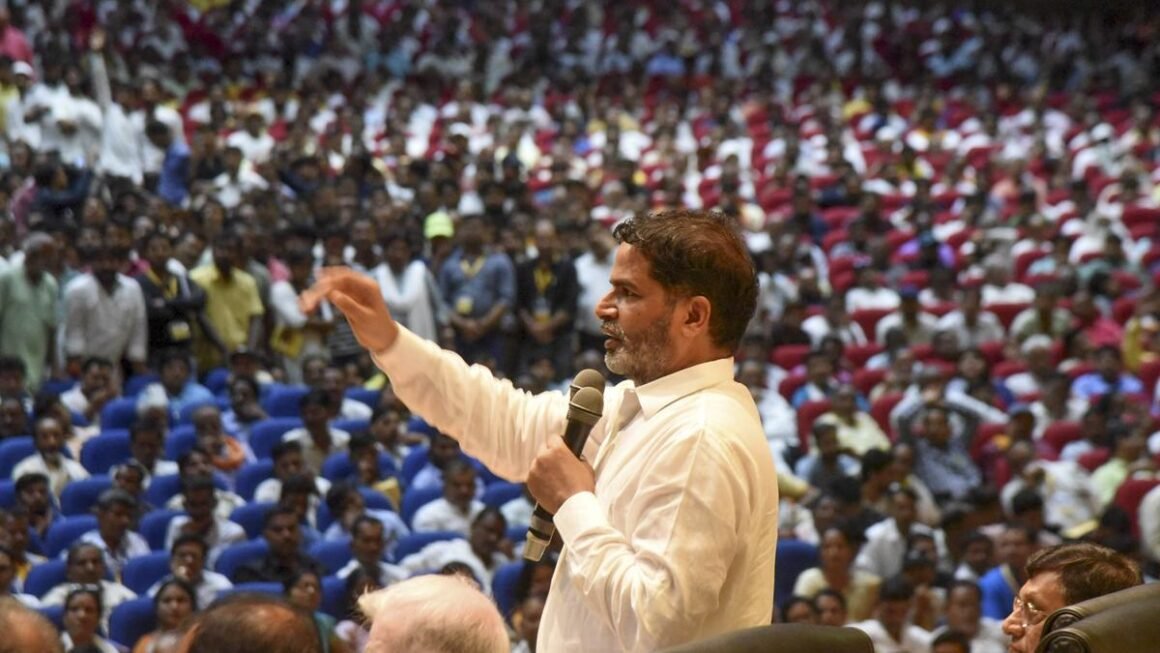
On November 14, 2025, Prashant Kishor’s Jan Suraaj Party (JSP), which entered the 2025 Bihar Assembly elections with massive attention and a reformist pitch, failed to convert its campaign buzz into electoral success. Despite contesting almost every seat and pushing an ambitious message of governance-first politics, the party could not secure even a single seat. The results reveal a clear gap between public enthusiasm for Kishor’s vision and the party’s actual on-ground influence.
The defeat underscores the challenges that new political forces face in Bihar. Suraaj Party’s inability to build a strong booth-level presence became evident as vote counts trickled in. In several constituencies, JSP candidates even polled fewer votes than NOTA, raising serious questions about organisational preparedness.
For political observers, Jan Suraaj Party’s Bihar election failure offers a reality check: electoral victories require more than roadshows and digital engagement. Bihar’s grassroots politics demands deep community connect, credible local leadership, and sustained on-ground mobilisation—areas where JSP struggled to establish a foothold. While Kishor’s vision for a corruption-free, development-oriented Bihar struck a chord among urban youth, it did not resonate strongly in rural pockets where voters prioritise caste representation and local familiarity.
Going forward, the setback leaves Prashant Kishor at a crossroads. Will he rework JSP’s strategy, strengthen its cadre, and prepare for the long haul? Or will Jan Suraaj fade like many previous third-front experiments? The election outcome may not be the end of the road, but it certainly marks a tough beginning for Kishor’s political aspirations.
The Jan Suraaj Party’s Bihar election campaign had created significant curiosity in Bihar’s political circles over the past two years, largely because of Prashant Kishor’s reputation as one of India’s most successful political strategists. His padyatra across the state, covering thousands of kilometres, was seen as an attempt to understand issues on the ground firsthand.
Yet, when it came to the final test of electoral mobilisation, the party’s organisational machinery simply wasn’t strong enough to compete with the well-entrenched networks of the NDA and Mahagathbandhan.
Many political experts believe that Jan Suraaj Party’s Bihar election messaging—focused on jobs, education reforms, decentralised governance, and corruption-free administration—was strong but failed to reach the rural majority effectively. Bihar’s political landscape still revolves around trust built over decades, local power centres, and caste alliances. Without a dominant caste backing or alliances with established regional players, the Jan Suraaj Party’s Bihar election found itself struggling to convert its vision into votes.
Moreover, Kishor’s choice to stay out of the electoral contest may have weakened the party’s emotional connect with voters. For a new party, the leader’s presence on the ballot often acts as a catalyst for building momentum. By not contesting, Kishor positioned himself more as a strategist than a frontline leader, a move that analysts say diluted the party’s ability to inspire confidence among undecided voters.
The results also highlight a broader truth about Indian politics—new parties rarely find instant success without sustained grassroots engagement. From AAP’s slow growth in Delhi to regional outfits that took years to establish themselves, political credibility is built over time. Jan Suraaj Party’s Bihar election debut, though disappointing, may still serve as a learning curve if the party chooses to rebuild strategically rather than retreat.
The Jan Suraaj Party’s Bihar election disappointing debut in the Bihar Assembly elections reflects the tough realities of state-level politics, where ideas alone cannot win without deep grassroots penetration. Prashant Kishor’s vision of a reform-driven, corruption-free Bihar resonated with a segment of urban youth but failed to convert into votes across rural and caste-driven landscapes.
The 2025 result is not the end of the road for JSP — but it is a wake-up call. If the party hopes to survive, it must build organisation, nurture local leadership, strengthen booth networks, and reconnect with voters on the ground. The real test for Jan Suraaj begins now, beyond the electoral noise.
FOR MORE BLOGS – beyondthepunchlines.com

Author: Team BTP

 Add to favorites