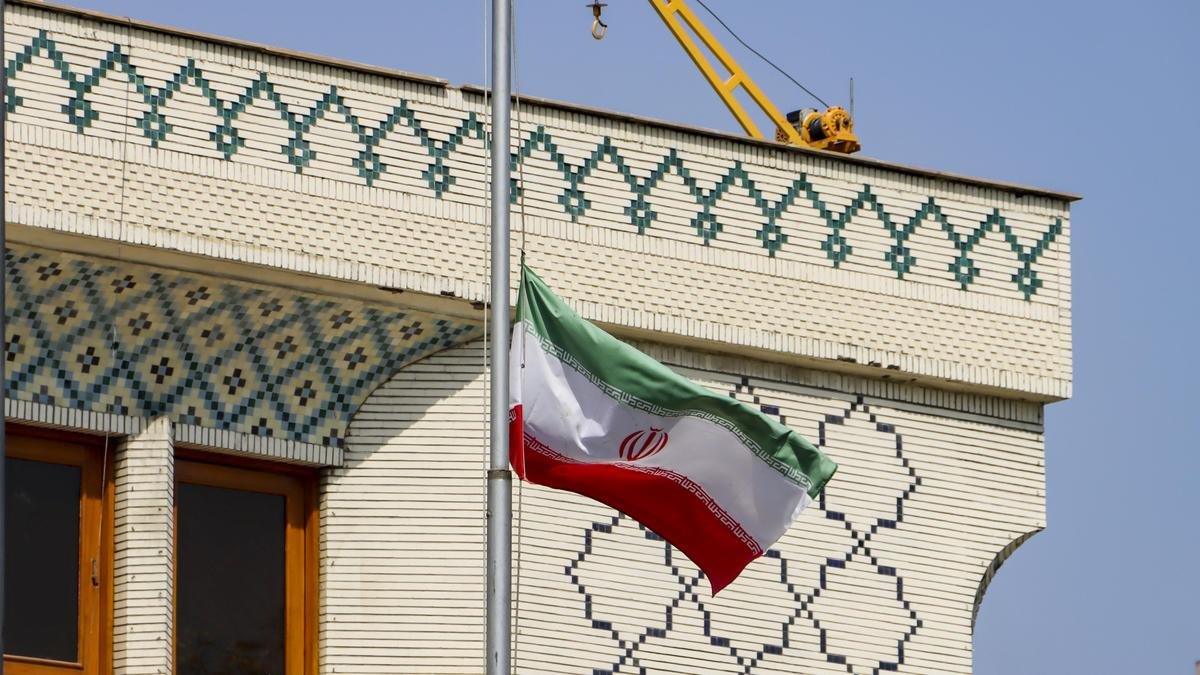
The reported death of Ayatollah Ali Khamenei has triggered a wave of diplomatic tension across continents, with one of the strongest responses coming from the Iranian Embassy in India. In a sharply worded statement issued from New Delhi, the mission urged governments around the world not to “remain silent,” calling the alleged killing an act of aggression that demands global condemnation.
The appeal reflects not only grief but also a calculated diplomatic message aimed at mobilizing international opinion during a moment of profound geopolitical uncertainty.
A Strong Diplomatic Appeal from New Delhi
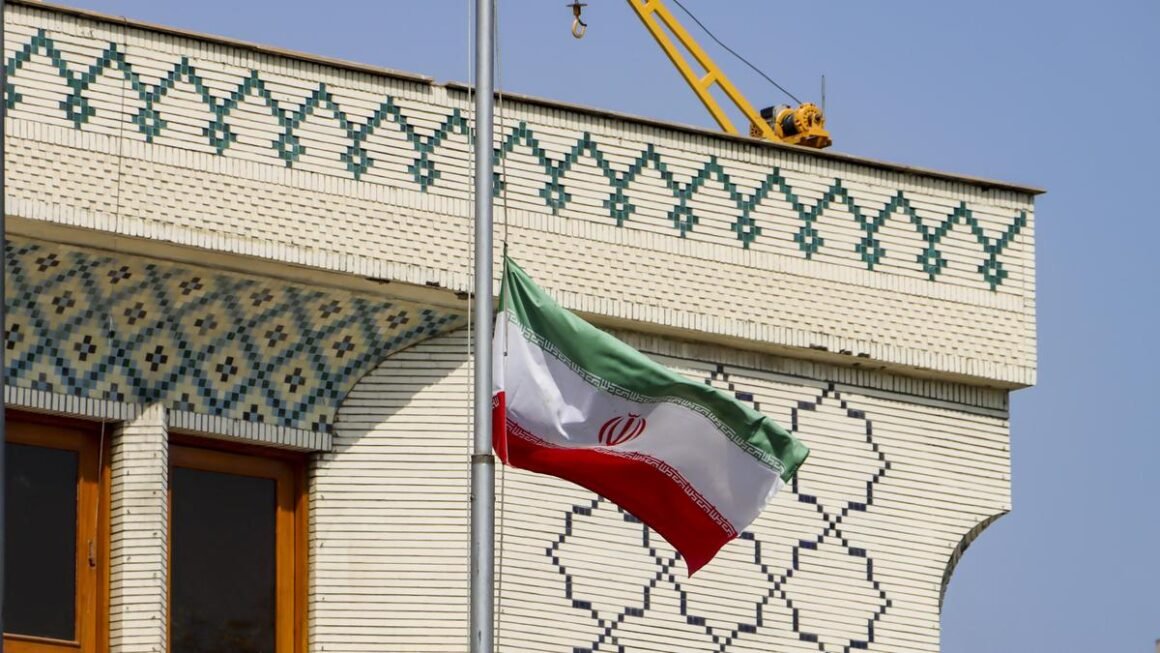
Shortly after reports emerged of Khamenei’s death in what has been described as a coordinated strike involving the United States and Israel, the Iranian mission in New Delhi lowered its flag to half-mast. The gesture symbolized mourning, but the official statement that followed carried much heavier diplomatic weight.
The embassy described the incident as a violation of sovereignty and international law. It called on “independent and freedom-seeking nations” to publicly condemn the action, warning that silence would embolden further destabilization in the Middle East. The tone of the message was firm and resolute, emphasizing that Iran expects moral clarity from the global community.
This appeal is not merely rhetorical. It is part of a broader strategy to shape the global narrative around the incident and frame it as an unlawful act that threatens international stability.
Rising Tensions in the Middle East
The Middle East has long been a region of fragile alliances and strategic rivalries. The reported killing of Iran’s Supreme Leader marks a potentially historic turning point. As the highest authority in Iran’s political and religious hierarchy, Khamenei held decisive control over military policy, foreign relations, and domestic governance.
Any abrupt vacuum at the top of Iran’s leadership structure is likely to have ripple effects. The Islamic Revolutionary Guard Corps has reportedly vowed retaliation, raising concerns of a broader confrontation. While official details remain fluid, the rhetoric emerging from Tehran suggests that the country will not allow the incident to pass without response.
Such developments increase the risk of retaliatory strikes, proxy conflicts, cyber operations, or economic disruptions, particularly around critical trade routes such as the Strait of Hormuz.
India’s Delicate Diplomatic Position
For India, the situation presents a complex diplomatic challenge. India maintains important strategic ties with Iran, particularly in the context of energy security and infrastructure projects like the Chabahar Port. At the same time, New Delhi shares strong defense and economic partnerships with both the United States and Israel.
India has traditionally advocated dialogue, de-escalation, and respect for sovereignty in international conflicts. However, taking a firm position in this scenario could risk straining key relationships. As a result, observers expect India to adopt a cautious and measured approach, emphasizing peace while avoiding direct alignment.
The Iranian Embassy’s appeal in India therefore carries additional significance. By issuing its call from New Delhi, Tehran may be seeking broader Asian diplomatic backing in a rapidly evolving global crisis.
Global Reactions and Strategic Implications
The international response has so far been mixed. Some governments have called for restraint and de-escalation, while others have withheld formal reactions pending further confirmation. Financial markets have reacted nervously, particularly in the energy sector, as traders assess the risk of regional instability affecting oil supplies.
The death of a sitting Supreme Leader is not just a national tragedy; it is a geopolitical event with far-reaching consequences. Leadership succession in Iran involves both political institutions and religious oversight bodies, making the transition process closely watched by allies and adversaries alike.
If tensions escalate further, the conflict could reshape alliances across West Asia and influence global security calculations.
A Defining Moment in Global Diplomacy
The central message of the Iranian Embassy’s statement is clear: silence is not an option. By urging the international community to condemn what it describes as an unlawful act, Iran is attempting to rally diplomatic support and prevent normalization of targeted strikes against sovereign leadership.
Whether the global community responds with strong condemnation, cautious neutrality, or strategic silence will shape the trajectory of this unfolding crisis. The coming weeks will likely determine whether diplomacy prevails or whether the region enters a prolonged period of confrontation.
In a world already grappling with multiple conflicts, the reported death of Ayatollah Ali Khamenei may mark one of the most consequential geopolitical flashpoints in recent years.
FOR MORE BLOGS – beyondthepunchlines.com

Author: Team BTP

 Add to favorites