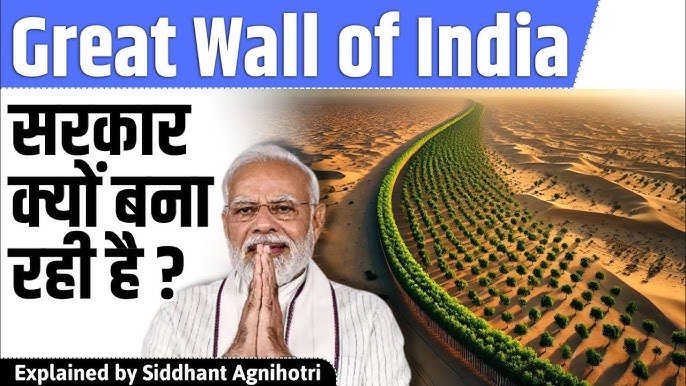
The Vision of a Living Wall
India is not building a wall of bricks or concrete — it is creating a Great Green Wall, a 1,400-km stretch of trees and vegetation across the Aravalli range. From Porbandar in Gujarat to Delhi, this ecological wall will be around 5 km wide, forming a natural barrier against desertification and climate change. The initiative mirrors Africa’s “Great Green Wall” and is one of India’s most ambitious environmental projects.
Why Build a Green Wall?
- Combat Desertification: The Thar Desert is expanding eastwards, threatening fertile lands in Rajasthan, Haryana, and beyond.
- Restore Forest Cover: Aravalli forests have been degraded by mining, urbanization, and deforestation.
- Protect Communities: Villages in the region face water scarcity, soil erosion, and dust storms; the wall aims to mitigate these risks.
- Climate Action: Increasing green cover helps absorb carbon dioxide, reduce heat island effects, and improve air quality in Delhi-NCR and surrounding states.
- Biodiversity Boost: Native plants, shrubs, and grasses will bring back lost flora and fauna, supporting pollinators and wildlife corridors.
The First Steps
- The Ministry of Environment and Forests, in collaboration with state governments, is spearheading the project.
- Haryana’s Phase One: restoration of nearly 24,990 hectares of degraded land across Gurgaon, Faridabad, Nuh, Rewari, and Mahendergarh in three years.
- Community Role: Villagers and resident groups are encouraged to participate in plantation drives and tree protection, making the project people-driven.
- Funding: A mix of government schemes, CSR funding, and international climate financing is being explored to sustain the initiative.
What Will It Look Like?
This “Great Green Wall” will not be a single row of trees but a corridor of forests, shrubs, and grasslands, stitched together across four states. Native species will be prioritized to maintain biodiversity. The wall is expected to:
- Revive groundwater tables through soil moisture conservation.
- Provide new habitats for wildlife such as leopards, jackals, and migratory birds.
- Act as a shield against dust, heatwaves, and desert winds.
- Offer eco-tourism opportunities and green jobs for local communities.
Challenges on the Path
- Land Acquisition: Finding continuous land without disputes is difficult in densely populated states.
- Maintenance & Survival: Planting millions of saplings is easier than ensuring they survive over decades.
- Urban Pressure: Construction, illegal mining, and encroachments in Aravallis remain major threats.
- Policy Consistency: Changing governments and policies could impact long-term continuity.
Lessons from Africa’s Green Wall
India’s project draws inspiration from Africa’s Great Green Wall Initiative, which aims to restore 8,000 km across the Sahel. Learning from Africa, India plans to:
- Involve local communities in protection and livelihood generation.
- Focus on native and climate-resilient species rather than fast-growing exotics.
- Integrate agro-forestry and sustainable grazing to support farmers.
A Step Toward a Greener Future
India’s Great Green Wall is more than an environmental project; it is a symbol of resilience and hope. If successful, it will:
- Stop desertification across western India.
- Transform thousands of villages with improved water, soil, and farming conditions.
- Improve air quality for millions in Delhi-NCR.
- Create a lasting ecological legacy, strengthening India’s fight against climate change.
while the world builds walls to divide, India is building a wall to protect — a wall of life, green cover, biodiversity, and hope for generations to come.
FOR MORE BLOGS – beyondthepunchlines.com

Author: Team BTP

 Add to favorites