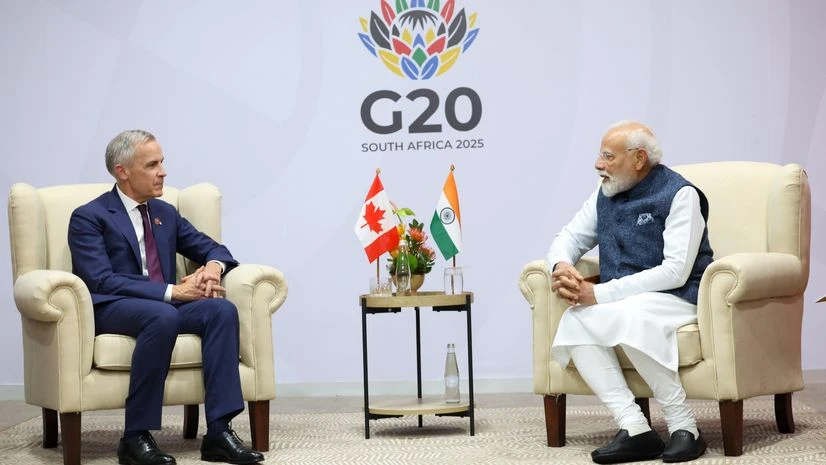
India and Canada have taken a significant step toward repairing strained diplomatic ties on November 24, 2025, as the long-delayed negotiations on the Comprehensive Economic Partnership Agreement (CEPA) officially resumed on November 24, 2025. This marks a strategic shift for both nations, signalling that economic cooperation is now being placed above political turbulence.
A Reset After Months of Diplomatic Freeze
The India-Canada relationship has endured an intense period of turbulence in the past year, fuelled by diplomatic disputes, political rhetoric, and domestic pressures on both sides. However, trade officials in New Delhi and Ottawa have revived CEPA discussions as both nations recognise the immense untapped potential of deeper bilateral trade and investment.
With India positioned among the world’s fastest-growing major economies and Canada looking to broaden its trade partnerships beyond the West, the timing of this renewed engagement offers a mutually beneficial opening.
What CEPA Means and Why It Matters
The Comprehensive Economic Partnership Agreement is a wide-ranging trade pact aimed at reducing tariffs, easing market access, expanding services cooperation, and boosting cross-border investments. Although discussions on CEPA have been ongoing for more than a decade, political disagreements repeatedly stalled progress.
In today’s shifting geopolitical environment — shaped by supply-chain uncertainty, new trade blocs, and shifting alliances — CEPA has regained urgency. The resumed negotiations promise to:
- Boost bilateral trade across major sectors.
- Encourage stronger investment flows.
- Provide stability amid political volatility.
- Strengthen cooperation in energy, agriculture, and technology.
Converging Strategic Interests
India has emerged as a global hub for manufacturing, innovation, and technology, while Canada remains a powerhouse in natural resources, education, energy, and innovation-based sectors. CEPA discussions highlight a strategic alignment, reflecting economic pragmatism on both sides.
For India, deeper engagement with Canada offers improved access to critical minerals, advanced agricultural technology, and education partnerships. For Canada, India is a key market for natural resources, services, clean energy, and agri-food exports.
Political Context: Learning to Compartmentalise
The earlier diplomatic freeze cast a long shadow over bilateral ties. However, sources indicate that trade negotiators are now working to insulate CEPA from political disagreements. This marks a mature phase in the relationship where both nations recognise the economic costs of sidelining trade opportunities.
What Comes Next in CEPA Negotiations?
Upcoming negotiation rounds are expected to focus on priority sectors including:
- Digital trade and emerging technologies
- Agriculture and food processing
- Skilled labour mobility
- Critical minerals and clean energy
- Education and institutional partnerships
If successful, CEPA could significantly elevate India-Canada trade volumes and unlock new business opportunities across industries.
A Deeper Economic and Strategic Reset
Beyond trade, the resumption of India-Canada CEPA talks reflects a broader reconsideration of India–Canada ties. Both governments understand that while political disagreements may resurface from time to time, long-term economic partnerships cannot remain hostage to temporary diplomatic turbulence. The decision to return to the negotiating table underscores a mutual recognition of shared goals — economic resilience, global competitiveness, and strategic relevance in a multipolar world.
Furthermore, both nations are confronting global economic headwinds marked by inflationary pressures, supply-chain fragmentation, and technological disruptions. In such a climate, India and Canada stand to benefit by aligning their strengths: India’s innovation-driven workforce and expanding manufacturing base, and Canada’s resource wealth, technological leadership, and stable investment environment.
The business communities in both countries have also long advocated for a more predictable and structured economic framework. CEPA, therefore, is not just a diplomatic reset but a response to industry demands for smoother operations, reduced regulatory barriers, and enhanced mobility for skilled professionals.
Conclusion: India-Canada CEPA
The revival of CEPA talks is not just an economic process — it represents a broader diplomatic reset. As India and Canada aim to rebuild trust, CEPA stands as a central tool for shaping a resilient, forward-looking partnership.
The coming months will determine whether both nations can move past earlier disputes and embrace one of the Indo-Pacific region’s most promising bilateral economic relationships.
FOR MORE BLOGS – beyondthepunchlines.com

Author: Team BTP

 Add to favorites