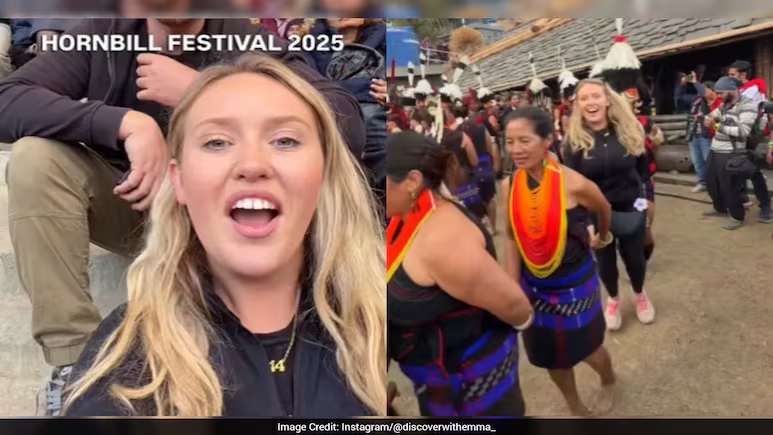
The Hornbill Festival in Nagaland: A Foreign Visitor’s Tale has always been a vibrant window into the rich and diverse cultures of Northeast India. But this year, it gained global attention after a foreign traveller shared her electrifying experience online, calling it the “India you don’t see.”
Her reactions, captured in a viral video, did more than just entertain — they showcased a side of India that remains unexplored by most, even within the country.
A Festival That Redefines India’s Cultural Map
Every year in December, the Hornbill Festival in Nagaland brings together all 17 major Naga tribes to celebrate their art, dance, music, folklore, cuisine, and traditions. It is often described as a living museum of indigenous heritage. But for many global travellers, this festival becomes their first true introduction to the cultural depth of Northeast India.
The foreign woman’s comments reflect this exact sentiment. Standing amidst rhythmic drums, swirling dances, bright tribal costumes, and intoxicating energy, she called the opening ceremony “crazy” — in the most exhilarating way possible. For her, Nagaland was not the India she had imagined. It was fresher, wilder, and far more culturally alive.
‘India You Don’t See’: Why Her Reaction Matters
When she said, “This is India you don’t see,” it resonated across social media. Most international tourists associate India with the Taj Mahal, Rajasthan’s deserts, or Kerala’s backwaters. Nagaland and the broader Northeast rarely make it to Western itineraries.
Her video broke these stereotypes by showing:
- Vibrant tribal dance performances that preserve centuries-old stories.
- Traditional Naga food, including smoked meats, bamboo dishes, and fiery chillies.
- Local games like wrestling and archery, adding a raw, authentic charm.
- Handcrafted tribal jewellery and textiles that carry ancestral symbolism.
Her excitement wasn’t just about the visuals — it was about discovering a hidden world that global travel narratives often ignore.
What Makes Hornbill Festival So Unique?
The Hornbill Festival is not just a cultural show; it is an emotional experience. Visitors witness:
- Tribal unity across ethnic groups.
- Music that blends folk traditions with modern Naga rock.
- Morungs (traditional Naga houses) that serve as storytelling hubs.
- Indigenous customs performed with unmatched pride.
Even for seasoned travellers, the festival feels like stepping into a living cultural epic.
International Tourism Boost: A Festival That Travels the World
The foreign woman’s video has already sparked conversations across digital platforms. Many users called it an eye-opener, saying they never knew places like Nagaland existed within India. Others expressed interest in visiting the festival in the coming years.
Such global exposure directly benefits local communities:
- Boosts cultural tourism.
- Supports tribal artisans.
- Encourages rural economic growth.
- Strengthens cultural preservation initiatives.
A Reminder to Indians Too: Hornbill Festival in Nagaland
Interestingly, her reactions were not just for international audiences — they were a reminder to Indians across mainland states. Nagaland’s culture is often sidelined in mainstream media. Videos like these help bridge the emotional and cultural distance that separates the Northeast from the rest of the country.
Conclusion: Hornbill Festival in Nagaland
The foreign traveller’s “crazy” experience at the Hornbill Festival has become more than a viral moment. It is a celebration of cultural diversity, a showcase of indigenous pride, and a reminder that India is not a single story but a hundred different worlds. Nagaland’s Hornbill Festival stands as one of the most powerful representations of this richness.
Her words — “India you don’t see” — echo a truth that many travellers are only beginning to discover: the real India is vast, vibrant, and beautifully unexpected.
FOR MORE BLOGS – beyondthepunchlines.com

Author: Team BTP

 Add to favorites