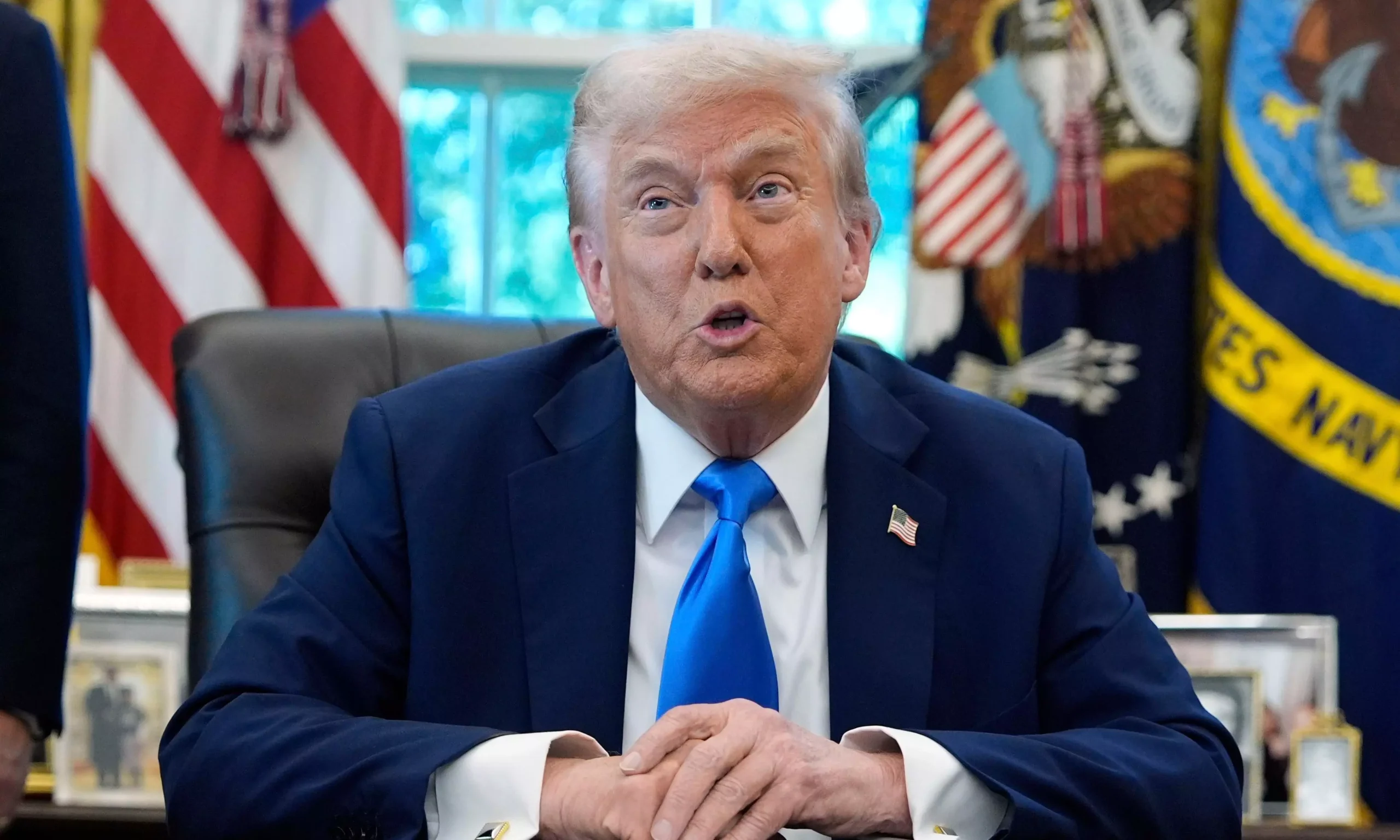
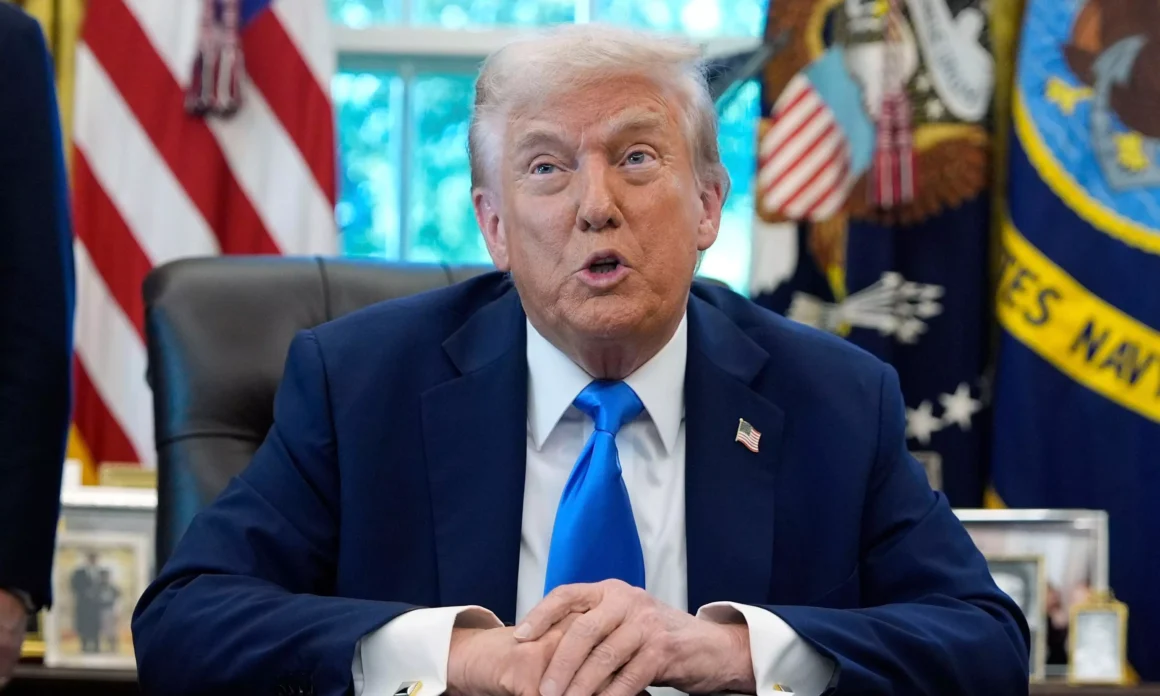
Overnight, a single proclamation made the H-1B visa less of a career ladder and more of a $100,000 gamble—and Donald Trump’s shifting moods explain why.
A Rule That Landed Like a Thunderclap
On September 21, 2025, the White House detonated a policy bombshell: a $100,000 one-time fee slapped on every new H-1B visa petition, instantly transforming the world’s most sought-after work visa into the costliest gamble in global hiring history. What was once a career ladder for thousands of Indian engineers, U.S. tech graduates, and international students has suddenly become a six-figure luxury reserved for only the rarest, highest-value hires.
The announcement, made through a presidential proclamation signed by Donald Trump, has thrown both India’s $150 billion IT export industry and Silicon Valley’s innovation machine into turmoil. Panic spread as early headlines suggested it might be an annual recurring fee, before late-night clarifications confirmed it applied only to new petitions filed after September 21. But by then the damage was done—students, families, and companies across two continents were left scrambling to recalculate their futures.
For India, which accounts for over 70% of all H-1B approvals, the move threatens everything from on-site tech projects in the U.S. to the dreams of 200,000+ Indian students studying in American universities. For U.S. firms, already desperate for STEM talent, the surcharge raises fears of talent shortages, skyrocketing costs, and slower innovation. And for Trump, the fee is more than policy—it is political theater, crafted to showcase toughness on immigration, pressure India in trade negotiations, and deliver an election-year jolt to his voter base
Timeline: From Rumor to Reality
- Sept 19–20, 2025: Rumors leak about a steep new visa fee. Panic spreads; some reports claim it will be “annual.”
- Sept 21 (Morning): President Trump signs a proclamation introducing the $100,000 surcharge.
- Sept 21 (Afternoon): Headlines misreport it as an “annual fee,” triggering fear among existing visa holders.
- Sept 21 (Evening): White House and USCIS clarify: one-time, new petitions only.
- Sept 22 onwards: Indian government calls it “humanitarianly disruptive”; U.S. Chamber of Commerce warns of “business shocks”; tech firms scramble to update hiring playbooks.
The Math: Before vs. After
| Petition Type | Old Cost (USD) | New Cost (USD) | % Increase |
| New H-1B (cap) | 6,000–10,000 | 106,000–110,000 | +1000% |
| Renewal/Extension | 6,000–10,000 | 6,000–10,000 | No change |
| Transfer (job change) | 6,000–10,000 | 6,000–10,000 | No change |
USCIS data shows that in FY2024 alone, nearly 470,000 registrations were filed for just 85,000 available slots. Now, employers must decide whether to spend not $10,000—but over $100,000 upfront—on each new hire.
Why Trump’s Mood Swings Matter
Donald Trump’s relationship with immigration policy has always been transactional and theatrical. On one hand, he praises Indian CEOs and Silicon Valley innovators in private business meetings. On the other, he rallies his voter base with fiery warnings about “foreign workers replacing Americans.”
By first allowing rumors of an “annual fee” to circulate and then clarifying it as “one-time only,” he positioned himself as decisive while leaving both sides uncertain. This was not purely policy—it was political choreography designed to maximize impact in an election year.
What Other U.S. States Are Saying
- California: Strong pushback from lawmakers and tech giants, warning of a choke on innovation. Over 50,000 new H-1Bs in 2024 were approved for California alone.
- Texas: Mixed response. Dallas tech leaders criticize the fee, while Trump-aligned voices hail it as “pro-American jobs.”
- New York & New Jersey: Leaders emphasize humanitarian costs for immigrant families. These states host large Indian-American populations who are H-1B dependent.
- Midwestern states: Applause from manufacturing-heavy regions that see this as job protection, even though many H-1B roles don’t overlap with local labor.
The Purpose Behind Trump’s $100,000 H-1B Fee
Trump’s motivations are layered:
- Election Populism: Energize swing-state voters by promising “American jobs first.”
- India Leverage: By targeting India—the source of 70%+ of H-1B visas—Trump gains bargaining power in trade and defense talks.
- Revenue Tool: Even if 20,000 petitions are filed under the new rule, the U.S. treasury gains $2 billion+ in new revenue.
- Strategic Ambiguity: Employers pause, students panic, and Trump looks like the strongman reshaping immigration.
Sector-Wise Impact: Who Can Afford It?
- Indian IT Services (Infosys, TCS, Wipro): Infosys alone filed over 3,600 H-1Bs in 2024. At $100,000 each, that would mean $360 million extra in fees—a near impossibility. Expect fewer onsite rotations and more nearshore centers.
- Big Tech (Amazon, Microsoft, Google): For AI, chips, and cybersecurity, they’ll pay. But routine coder roles will be reallocated. Microsoft, for example, had over 15,000 H-1B holders in 2024; scaling that model now costs billions.
- Startups: The most vulnerable. A 20-person startup cannot justify burning $100,000 per hire.
- Universities & Nonprofits: Their cap-exempt status may make them the new havens for global talent.
The Indian Perspective: Why This Hurts the Most
IT Industry at Crossroads
India’s $150+ billion IT export model is deeply tied to U.S. visas. With over 70% of H-1B approvals going to Indians in 2024, the system kept Indian engineers at the heart of American tech delivery. The $100,000 surcharge pushes companies toward Canada, Mexico, and Eastern Europe.
Students in the Crossfire
Over 200,000 Indian students are studying in U.S. universities. Families spend ₹50–80 lakh on education, expecting a career path through OPT to H-1B. But now employers hesitate: why pay $85 lakh extra for a new graduate? The ROI of a U.S. degree is suddenly in doubt.
Families and Migration Dreams
For the Indian middle class, the H-1B symbolized upward mobility. In 2024, India received $125 billion in remittances, much of it from U.S.-based professionals. If fewer Indians migrate, that inflow shrinks. H-4 spouses—often highly skilled women—face more uncertainty, and families planning U.S. futures must rethink.
Government’s Tightrope Walk
The Indian government faces pressure abroad and at home. Diplomatically, it will push this issue in FTA talks with the U.S. Domestically, opposition parties are already asking whether the Modi government has “failed to protect Indian talent.” Expect state-level leaders in Karnataka and Telangana (home to Bengaluru and Hyderabad IT hubs) to amplify concerns.
Geopolitics
If Indian talent feels unwelcome, countries like Canada, UK, Germany, and Australia stand ready. The U.S. risks losing its reputation as the default global magnet for skills.
Why India Is Uniquely Exposed
Unlike China, which has a stronger domestic tech ecosystem, or Europe, which is less dependent on U.S. visas, India’s IT, education, and middle-class dreams are all intertwined with the H-1B. That’s why the shock cuts so deep.
The Losses: What India and the U.S. Both Stand to Lose
India’s Losses
- Shrinking IT export margins as onsite projects become unviable.
- Families diverting students to Canada or Europe, hurting India’s education-prep economy.
- Falling remittances, weakening forex reserves.
- Soft power decline—fewer Indian CEOs rising through U.S. corporate ranks.
U.S. Losses
- Talent Crunch: H-1Bs dominate STEM, AI, and healthcare roles; without them, shortages grow.
- Innovation Slowdown: Research shows H-1B workers significantly boost patent filings and startup creation.
- Cost Inflation: Companies pay higher wages domestically, making projects costlier.
- Credibility Damage: By shutting doors, the U.S. undermines its image as the “land of opportunity.”
What’s Still Missing in the Conversation
- Historical Context: H-1B costs have risen before—like the $4,000 supplemental fee in 2010—but never this dramatically.
- Employer Scenarios:
- If courts strike it down → rush of filings.
- If it lasts 1 year → employers pivot to cap-exempt roles.
- If permanent → offshore hubs become standard.
- Candidate Survival: Strategies include targeting universities/nonprofits, pursuing H-1B transfers/extensions, and building rare skill portfolios.
- Counter-Arguments in the U.S.: Some restrictionists say the fee forces companies to hire and train Americans. Economists disagree, warning talent gaps will cripple innovation.
- Real Quotes:
- “This fee will have humanitarian consequences,” — India’s MEA.
- “It puts U.S. firms at a competitive disadvantage,” — U.S. Chamber of Commerce.
- “We’ll pay for 1 in 10 hires—but the era of mass rotations is over,” — Senior Indian IT executive.
- Future Scenarios: If Trump is re-elected, the fee may extend or expand. If reversed, a rush of pent-up demand could flood USCIS in 2026.
Where the H-1B Stands After September 2025
This is more than a visa change—it is a shock to the very foundation of India–U.S. talent exchange.
For Trump, it’s an election-year statement. For U.S. states, the reactions are split: California protests, the Midwest cheers. For businesses, it’s a question of cost-benefit math. And for Indian families, it is a painful reminder that the American dream has been repriced at $100,000.
The H-1B visa has not disappeared. But as of September 21, 2025, it has become the most expensive lottery ticket in the world of work.
FOR MORE BLOGS – beyondthepunchlines.com

Author: Anjali Pandey

 Add to favorites