Punchline: A crucial India–US dialogue in New York aims to address the $100,000 H-1B visa fee shock and its ripple effects on tech workers and trade ties.
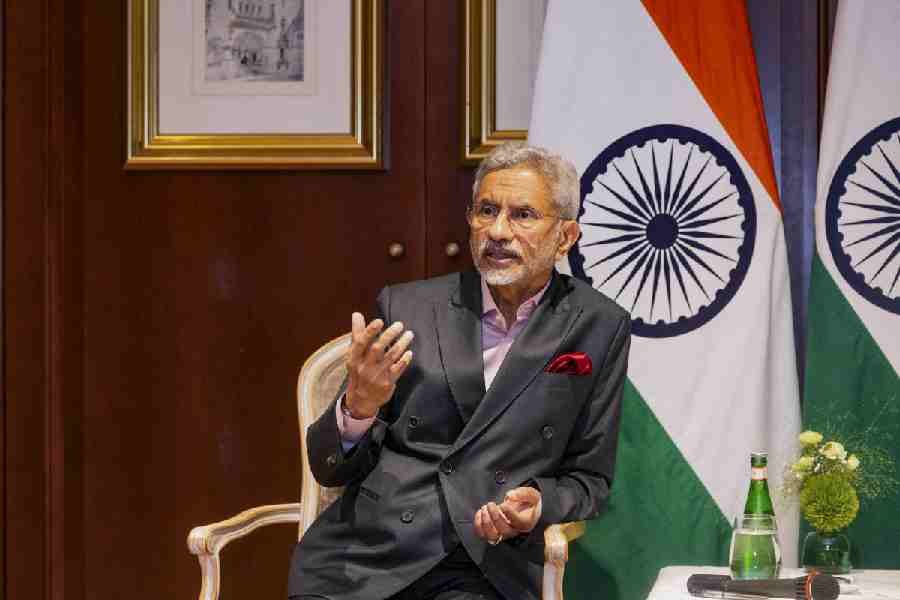
On September 22, 2025, External Affairs Minister S. Jaishankar is set to meet US Secretary of State Marco Rubio in New York on the sidelines of the United Nations General Assembly. This meeting carries heavy weight as it comes right after the Trump administration announces a $100,000 fee on new H-1B visa applications, a move that has rattled India’s IT industry and sparked widespread debate on the future of Indian tech workers in the United States.
Why This Meeting Matters
The H-1B visa program has long been the foundation of India–US technology ties. Every year, a large majority of H-1B visas—nearly 70%—are issued to Indian professionals, making this route essential for the Indian IT sector. Companies like Infosys, TCS, and Wipro rely on it to send engineers to work onsite in American offices. Families, too, have built entire lives around the stability and opportunity this visa offers.
The sudden fee hike has created uncertainty and fear. Even though Washington clarified that the charge applies only to new petitions and not to renewals or existing visa holders, the cost itself is unprecedented. At $100,000, it threatens to block young professionals from applying, reduce the affordability of hiring Indian workers for US companies, and weaken the flow of talent that powers Silicon Valley.
In this context, Jaishankar’s conversation with Rubio is seen as a test of how much influence India can exert to protect its citizens’ interests abroad while balancing broader strategic and economic ties with Washington.
Key Issues Likely on the Table
- Clarifying Scope and Timelines
India is expected to seek clear answers on when exactly the new fee will come into effect, how it will be applied, and whether transitional arrangements will be provided. Companies need certainty so they can plan recruitment and visa strategies for the coming year. - Safeguards for Current Workers
Even though the US has said existing visa holders are safe, concerns remain about renewals, re-entries, and possible hidden costs. Jaishankar is expected to press for guarantees that Indians already in the US will not face disruptions. - Trade and Tech Relations
The two leaders are also likely to discuss how to prevent immigration tensions from spilling over into trade and technology partnerships. With tariffs, data flows, and market access already delicate issues, neither country wants the H-1B row to derail larger cooperation. - Political Signaling
This meeting is also about optics. For India, it is important to show its citizens—especially the middle class and tech professionals—that their government is defending their interests. For the US, it is about balancing a domestic political narrative of protecting jobs while not alienating a strategic partner.
Economic and Political Backdrop
The timing of this meeting is significant. For India, H-1B visas are not just about jobs—they represent the aspirations of an entire middle class. Every year, thousands of students and engineers invest years of study, training, and financial resources with the dream of working in the US. A sudden barrier like this fee could derail those plans, leading to frustration and disappointment.
For the US, President Trump has pitched the fee hike as part of his “America First” jobs agenda, claiming it will discourage misuse of the visa system and encourage companies to hire American workers. With the midterm elections in 2026 looming, this is also a political message aimed at his voter base.
Economists warn that if the row is not addressed, it could affect not only Indian companies but also US firms that depend on Indian talent to remain competitive. The cost of innovation could rise, and cross-border collaboration could weaken, at a time when both nations face competition from China in areas like AI, semiconductors, and clean tech.
What to Watch After the Meeting
- Official Statements: Readouts from the Ministry of External Affairs and the US State Department will show whether any concessions or roadmaps were agreed upon.
- Agency Guidance: US immigration authorities (USCIS and State Department) will need to publish detailed operational rules to explain how the fee will work in practice.
- Industry Responses: Indian IT companies may rework their strategies, hiring more locally in the US or shifting operations back to India if costs remain too high.
- Political Reactions: Both governments will face scrutiny at home—Delhi for how strongly it defended its workers, and Washington for whether it sticks to or softens its stance.
The Bigger Picture
Ultimately, the Jaishankar–Rubio meeting is about more than just visas. It is about whether India and the US can handle sensitive disputes without letting them damage the larger partnership. Both countries need each other—for trade, security, and global influence. The H-1B fee hike is a challenge, but it is also a test of how resilient the partnership really is.
As Jaishankar sits down with Rubio in New York, the world will be watching. The outcome could define not just the future of Indian techies in America but also the tone of India–US relations for years to come.
FOR MORE BLOGS – beyondthepunchlines.com

Author: Team BTP

 Add to favorites