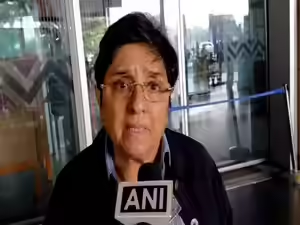
“When the air itself becomes a threat, even voices of influence can’t stay silent — Delhi’s toxic air demands urgent action.”
On November 27, 2025, Delhi once again found itself choking under dangerously toxic air levels, prompting public figures and citizens alike to express deep concern. Among the most vocal were Suhel Seth and Kiran Bedi, who described the situation as dystopian and urged immediate intervention from authorities.
Suhel Seth highlighted the severity of Delhi’s Toxic Air, stating that the city has become a dystopian space where citizens suffer daily from poor air quality. His remarks resonated with residents who have been experiencing respiratory issues, eye irritation, and other health problems due to the AQI reaching alarming levels.
Kiran Bedi, former Lieutenant Governor of Puducherry, also took to social media to call for urgent action. Sharing a poignant cartoon depicting the struggles of citizens affected by pollution, she captioned it, “Another feed,” emphasising how normalized the crisis has become.
She revealed that in her own locality, the AQI had shot up to 587, prompting her to keep her child indoors for safety. Bedi stressed that this ongoing situation is “agonising” and “depressing” for the residents of Delhi.
Current Situation and Health Impact
Delhi’s air quality has repeatedly been categorized as very poor or severe, with particulate matter and toxic emissions reaching hazardous levels. Hospitals report a surge in respiratory-related ailments, with long-term exposure potentially leading to chronic diseases and reduced life expectancy. The crisis is aggravated by multiple factors, including vehicular pollution, industrial emissions, construction dust, and seasonal agricultural stubble burning, compounded by weather conditions that trap pollutants close to the ground.
Medical experts, including those from AIIMS, warn that while masks and air purifiers provide temporary relief, they do not eliminate the health risks posed by prolonged exposure to such toxic air. Studies suggest that residents of Delhi experience a higher prevalence of asthma, bronchitis, cardiovascular diseases, and even cognitive effects due to chronic air pollution exposure.
Government and Public Response
The Commission for Air Quality Management (CAQM) has issued advisories and imposed temporary restrictions in certain areas, but many argue that these measures are insufficient. Citizens and activists have called for more aggressive steps such as banning polluting vehicles on high-AQI days, expanding green zones, and stricter monitoring of construction activities.
Social media is flooded with residents sharing photos of smog-filled streets and children wearing masks, highlighting the human cost of negligence. Bedi has urged the Prime Minister’s Office (PMO) to step in, emphasizing that the problem is no longer seasonal but a chronic, city-wide emergency.
Additionally, environmental NGOs have launched public awareness campaigns to encourage carpooling, reduced industrial emissions, and planting of urban trees, aiming to mitigate pollution levels over time. Schools in affected areas have begun issuing advisories, urging children to remain indoors, and offices are allowing flexible working arrangements to reduce exposure.
Long-Term Implications: Delhi’s Toxic Air
Experts warn that if systemic changes are not implemented, the cumulative effects of air pollution will impact Delhi’s population for decades, including a decline in lung function among youth, increased mortality rates, and economic losses due to healthcare costs and reduced productivity.
There is also growing concern about the mental health impact of living in a consistently polluted environment, including stress, anxiety, and depression related to persistent health hazards and restricted outdoor activities.
Urgent Need for Policy Action: Delhi’s Toxic Air
Authorities have been urged to implement long-term solutions such as stricter emission norms, improved public transport, curbs on stubble burning, and effective enforcement against industrial pollution. Public voices like Seth and Bedi’s amplify the urgency, pushing policymakers to act before the situation deteriorates further.
Experts emphasize that without systemic intervention, Delhi’s air pollution will continue to worsen, leading to increased hospitalizations, loss of productivity, and long-term health complications. Citizens are calling for collaborative efforts between the government, NGOs, and communities to mitigate the crisis.
The crisis is not just an environmental issue but a public health emergency that demands immediate and sustained government attention. Without decisive action, Delhi residents will continue to face daily health hazards and a declining quality of life, living in what many now call a truly dystopian cityscape. The voices of Suhel Seth, Kiran Bedi, and countless concerned residents underline the urgent need for change before it becomes irreversible.
FOR MORE BLOGS – beyondthepunchlines.com

Author: Nitin mittal
CA by qualification

 Add to favorites