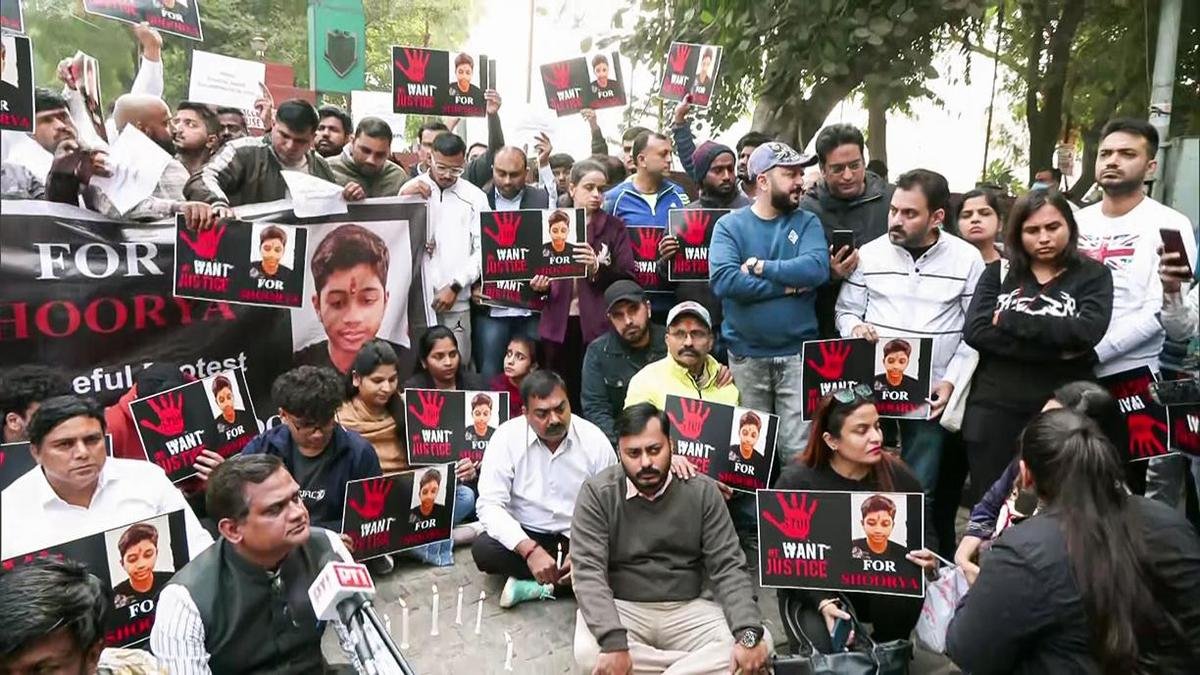
“The Delhi school suicide isn’t just a tragedy—it’s a mirror reflecting how deeply our education system is failing the children it claims to protect.”
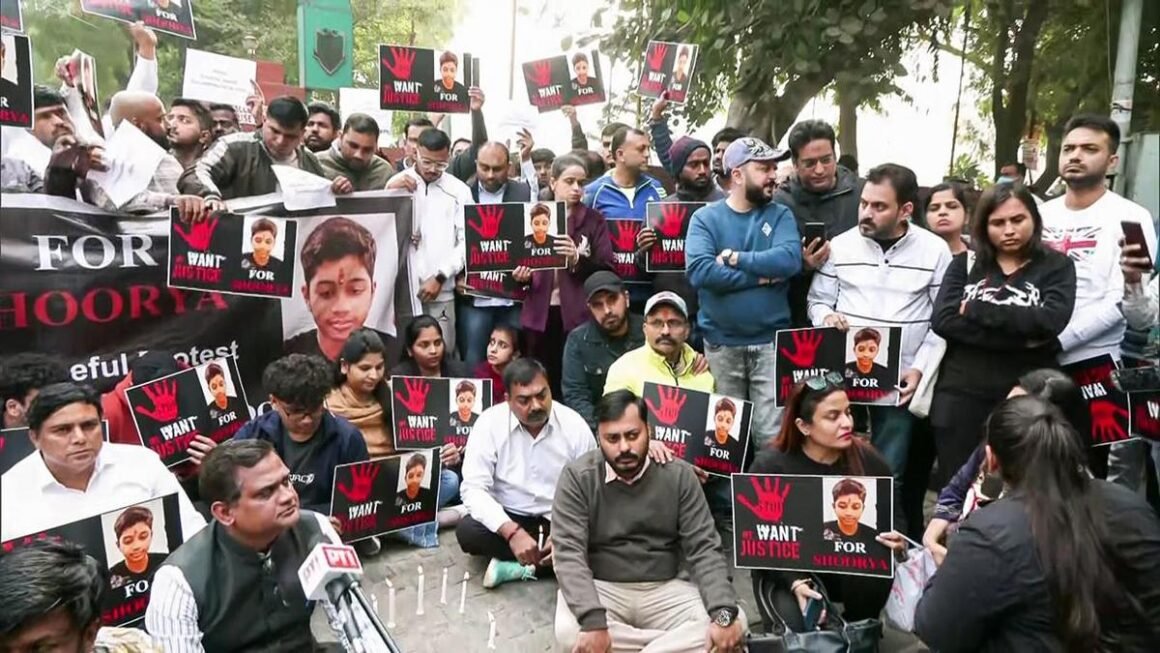
A shocking incident has once again raised critical questions about student safety and mental health inside educational institutions. A 16-year-old student from a Delhi school died by suicide, triggering massive outrage among parents, activists, and education experts.
In immediate response, the headmaster and three teachers of the school have been suspended pending investigation. The suspension has opened up a bigger debate about accountability, bullying, and negligence in schools across the capital.
What Happened?
According to early reports, the student was found dead under circumstances that have now prompted a detailed probe. The family alleges that constant harassment, academic pressure, and mistreatment by school authorities pushed the student to the edge. While the investigation is still underway, the Department of Education moved swiftly to suspend the headmaster and three teachers, sending a strong signal about zero tolerance for negligence.
Immediate Actions by Authorities: Delhi school suicide
The Delhi government’s education department ordered the formation of a special inquiry panel. The suspended staff members have been asked to cooperate fully with the investigation. The school administration, under pressure from parents and the media, has been directed to provide surveillance footage, academic records, and details of disciplinary actions taken against the student in the past.
A Larger Debate on School Pressure & Mental Health
This tragic incident is not isolated. Over the last few years, Delhi schools have been reporting rising cases of student anxiety, academic stress, bullying, and emotional breakdowns. Experts argue that institutions remain overly focused on marks and discipline rather than emotional well-being.
Key issues exposed: Delhi school suicide
- Lack of mental health support in schools
- Absence of trained counsellors
- Excessive academic pressure
- Toxic disciplinary practices
- Poor communication between teachers and parents
- Stigma around mental health discussions
Voices From the Ground: Delhi school suicide
Parents have demanded strict punishment for those responsible, while teachers’ associations have urged the government not to jump to conclusions before the probe is complete. Mental health practitioners emphasise the need for immediate reforms, including:
- Mandatory counsellors in all schools
- Sensitisation training for teachers
- Anti-bullying committees
- Reduced emphasis on rote learning
- Confidential reporting mechanisms for students
Why This Case Matters: Delhi school suicide
The suspension of four school staff members signifies a rare moment of swift action. But experts caution that suspending individuals alone will not fix a deep-rooted systemic crisis. Schools must evolve into safe spaces where students feel emotionally secure and heard.
Expanded Analysis: How Delhi Schools Are Failing Their Students
Delhi’s education landscape has undergone major transformation over the last decade, but the mental health ecosystem inside schools has failed to evolve at the same pace. Despite improved infrastructure and technological upgrades, emotional safety remains an overlooked pillar. Experts argue that the push toward academic excellence has created an environment where teachers are overburdened, counsellors are absent, and students feel increasingly isolated.
Systemic Gaps That Cannot Be Ignored
- Teacher-student ratio imbalance: Many schools operate with fewer teachers than required, leading to burnout among faculty and lack of individual attention for students.
- Outdated disciplinary methods: Several schools continue to rely on humiliation-based or fear-based discipline, which can severely impact young minds.
- Reporting mechanisms that don’t work: Students often hesitate to report bullying or harassment because many schools lack anonymous complaint systems.
- Parent-school mistrust: Communication gaps result in parents being unaware of their child’s behavioural or emotional struggles until it’s too late.
What Students Are Saying
Interviews conducted by child rights groups show that students feel trapped between exam pressure, comparison culture, social expectations, and fear of punishment. Many students describe school as a place of stress rather than learning. Several teenagers also report being dismissed or labelled as “lazy,” “distracted,” or “problematic” when they try to express emotional distress.
Conclusion: Delhi school suicide
The death of a 16-year-old student is a heartbreaking reminder of the pressure cooker environment inside many schools. As the investigation continues, one thing is clear: Delhi’s education system needs urgent reform. For real change, mental health must be treated as a core component of schooling—not an afterthought.
FOR MORE BLOGS – beyondthepunchlines.com

Author: Team BTP

 Add to favorites