“When the Bay of Bengal stirs, the land must prepare — Cyclone Ditwah is gearing up for a five-day assault of rain, wind, and rising seas.”
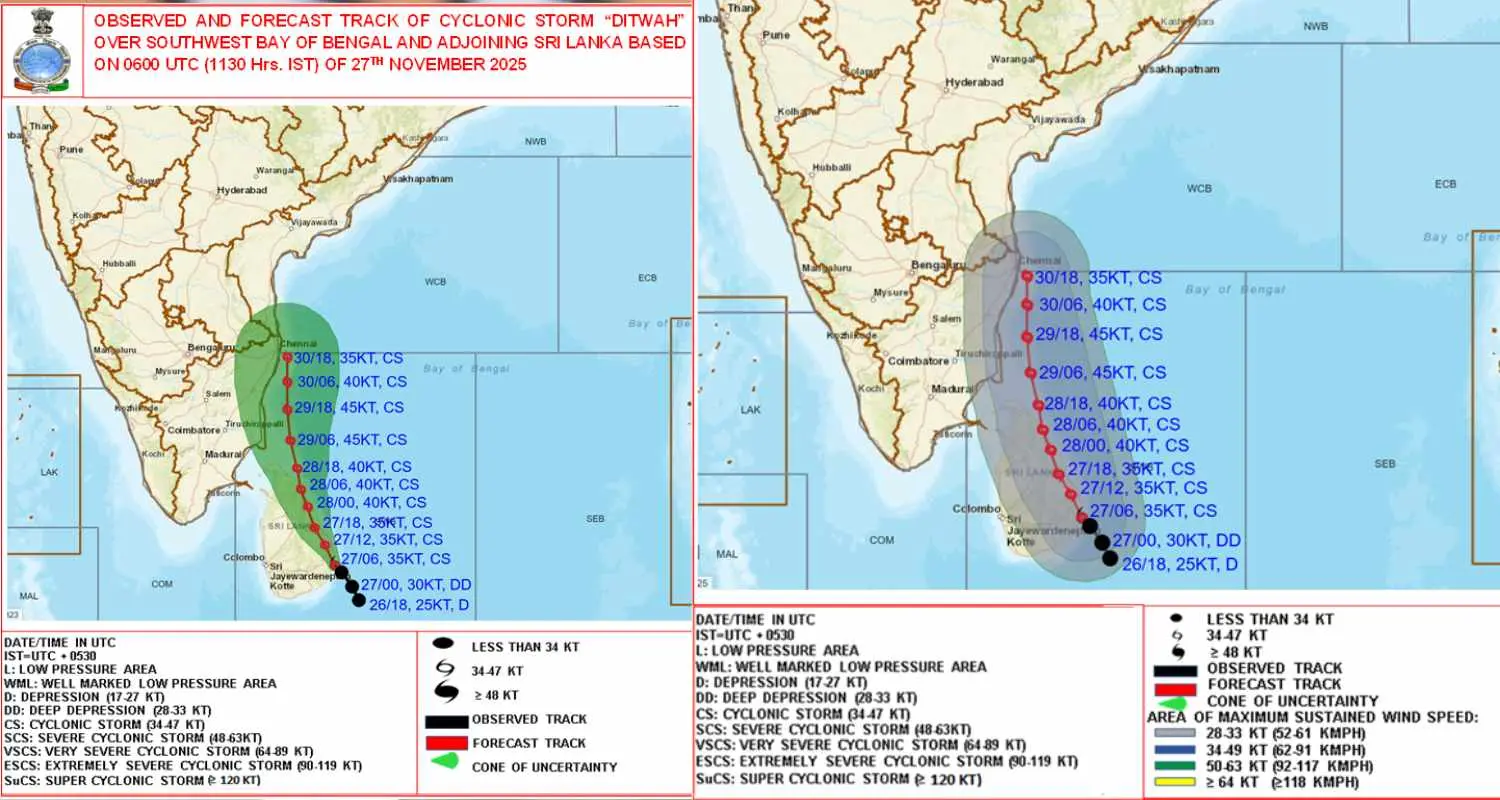
Cyclone Ditwah, formed on November 27, 2025, over the southwest Bay of Bengal, has quickly intensified into a strong cyclonic system, prompting the India Meteorological Department (IMD) to issue multiple alerts across southern India. The IMD has forecast five days of continuous heavy to extremely heavy rainfall, signaling a weather event that demands urgent attention from residents and authorities.
Originating near the Sri Lanka coast, the system strengthened from a low-pressure area into a deep depression before developing into Cyclone Ditwah. As it moves closer to the Indian shoreline, the threat level continues to rise, particularly for Tamil Nadu, Andhra Pradesh, and Puducherry.
Where Will Cyclone Ditwah Hit?
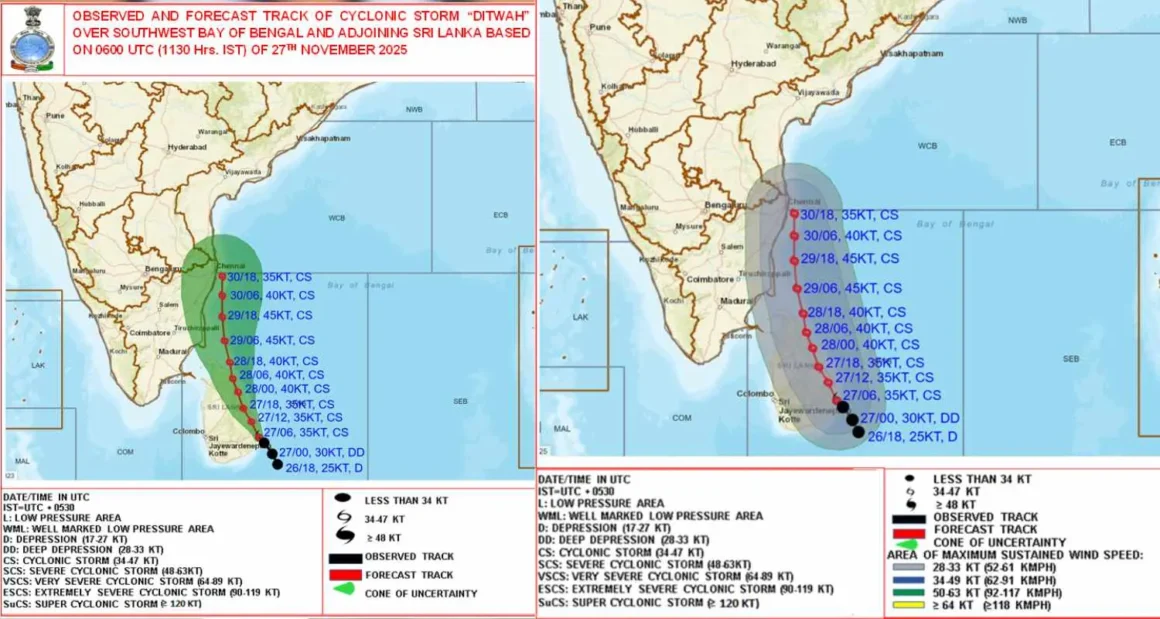
Cyclone Ditwah is expected to travel in a north-northwest direction, crossing the southwest Bay of Bengal and nearing the Indian coastline between November 29 and November 30.
According to IMD, the storm’s strongest impact will be felt across the following regions:
North Tamil Nadu Coast: Cyclone Ditwah
- Districts like Cuddalore, Nagapattinam, Mayiladuthurai, Thanjavur, Tiruvarur, Pudukkottai, Villupuram, and Chengalpattu are under high alert.
- Chennai will also experience moderate to heavy rainfall.
Puducherry & Karaikal
- The Union Territory is directly in Ditwah’s projected path.
- Extremely heavy rain and possible flooding expected.
South Coastal Andhra Pradesh
- Areas such as Nellore, Tirupati, and parts of Prakasam are likely to see intense rainfall and strong winds.
These regions may see the storm at its peak intensity, with strong gusts, widespread rainfall, and rough sea conditions.
States to Receive 5 Days of Heavy Rain: Cyclone Ditwah
The IMD has identified the following states as high-risk zones for continuous rainfall from Nov 27 to Dec 1:
Tamil Nadu (Highest Impact)
- Red and orange alerts across coastal and delta districts.
- Inland districts like Salem, Dharmapuri, Vellore, Tiruvannamalai, and Madurai will also see heavy spells due to moisture pull.
Puducherry
- Heavy to extremely heavy rainfall expected.
- Low-lying areas at risk of waterlogging.
Andhra Pradesh
- Southern and coastal parts under orange alert.
- Rayalaseema districts likely to see consistent rainfall.
Kerala
- Several districts placed under yellow alert.
- IMD warns of strong winds and rough seas.
Coastal Karnataka
- Moderate to heavy rainfall expected as the system moves inland.
Expected Timeline of the Cyclone’s Impact
November 27–28
- Initial rain begins in Tamil Nadu and Puducherry.
- System intensifies over the Bay of Bengal.
November 29–30 (Peak Impact Window)
- Heavy to extremely heavy rain in coastal TN and South AP.
- Very rough sea conditions.
- Possible flooding in urban and rural pockets.
December 1
- System weakens but continues to bring moderate rainfall inland.
- Kerala and Karnataka likely to receive residual showers.
Why Cyclone Ditwah Is Dangerous
- Warm Bay of Bengal waters are fueling rapid intensification.
- The storm is moving slowly, meaning longer rainfall duration.
- Interaction with the northeast monsoon increases rainfall intensity.
- Sea conditions are expected to remain dangerous for days.
What IMD Alerts Mean
- Red Alert: Extremely heavy rain; immediate action required.
- Orange Alert: Heavy to very heavy rain; stay prepared.
- Yellow Alert: Watch the weather; possible heavy rain.
Officials have asked fishermen across TN, AP, Kerala, and Karnataka to stay away from the sea until conditions stabilize.
What Residents Should Do: Cyclone Ditwah
- Avoid travel during peak rainfall hours.
- Charge devices and keep power backups ready.
- Stay away from coastal areas and rivers.
- Follow state disaster management advisories.
- Keep emergency supplies stocked.
Conclusion: Cyclone Ditwah
Cyclone Ditwah is shaping up to be one of the most significant weather events of the season, with IMD warning of five days of non-stop rain across southern India. As the storm advances towards Tamil Nadu, Puducherry, and Andhra Pradesh, residents must remain alert, follow official instructions, and prioritize safety.
Nature has issued its warning — stay prepared, stay safe.
FOR MORE BLOGS – beyondthepunchlines.com

Author: Team BTP

 Add to favorites