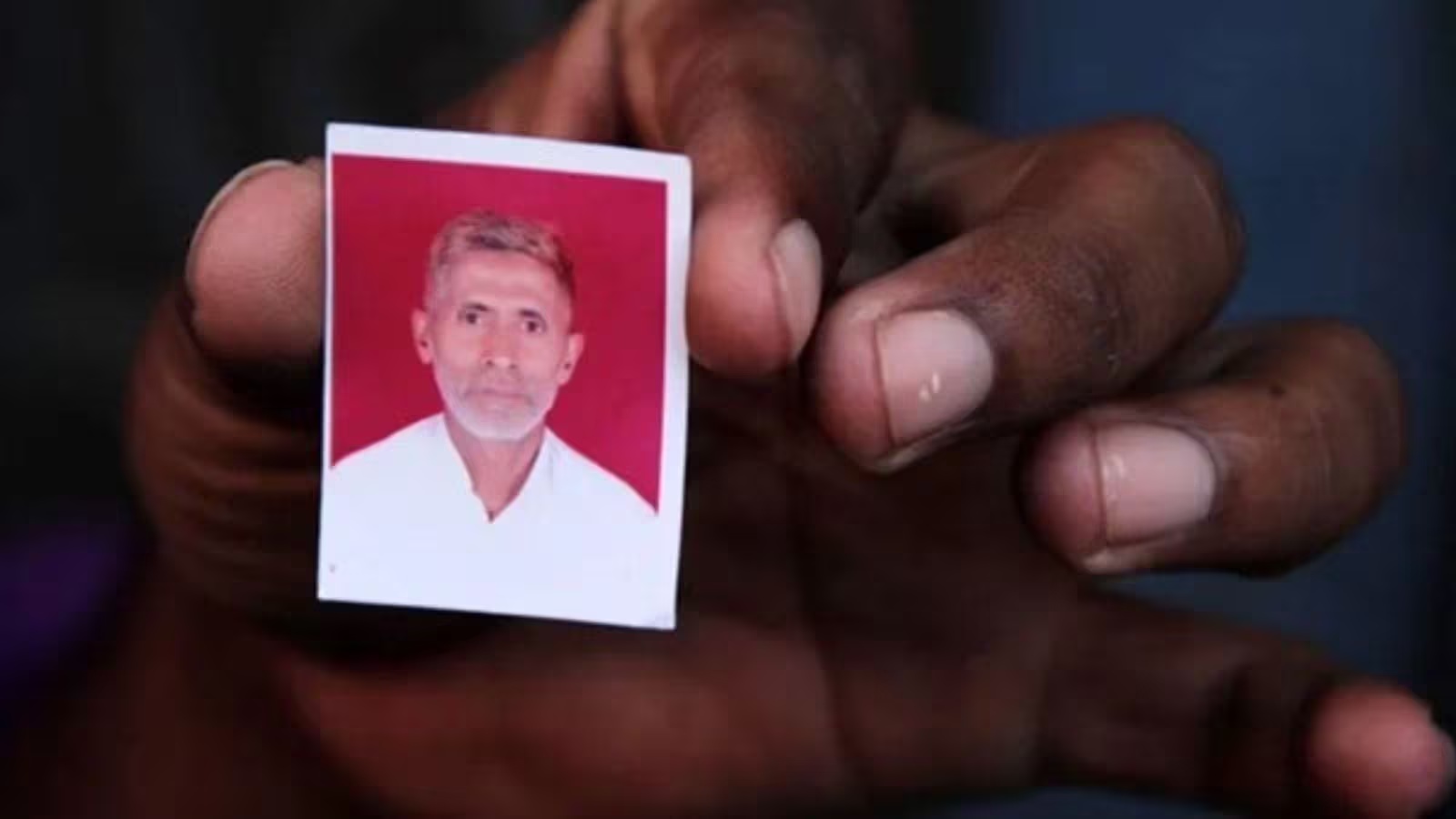

Nearly a decade after Mohammad Akhlaq was lynched in Uttar Pradesh, the judiciary has drawn a clear line. In a significant ruling, a court in Gautam Buddh Nagar has rejected the Uttar Pradesh government’s plea to withdraw criminal charges against all accused in the Akhlaq lynching case, calling the request baseless and unjustified.
The decision revives a case that had come to symbolise the dangers of mob justice and the long struggle for accountability in communal violence cases. For Akhlaq’s family and rights activists, the order is being seen as a reaffirmation of the rule of law.
What the Court Said: Akhlaq lynching case
The district court at Surajpur refused to accept the state government’s argument that withdrawing the case would promote social harmony. The judge observed that the prosecution’s request lacked legal merit and that serious offences like murder cannot be diluted through executive discretion.
Importantly, the court directed that the trial be fast‑tracked with day‑to‑day hearings, underlining the need for timely justice in cases involving grave crimes.
Background: The 2015 Lynching
Mohammad Akhlaq was brutally lynched on September 28, 2015, in Bisahda village of Dadri, following rumours that his family had stored beef in their home. The attack, carried out by a mob, triggered nationwide outrage and brought international attention to the issue of mob lynching in India.
The incident sparked intense political debate, protests, and soul‑searching over communal polarisation and the failure of institutions to prevent violence fuelled by misinformation.
Why the UP Govt Sought Withdrawal
The Uttar Pradesh government moved the court seeking withdrawal of charges, reportedly citing inconsistencies in evidence and concerns over maintaining communal peace. Critics, however, argued that the move signalled political interference in a criminal prosecution involving a serious human rights violation.
Legal experts have long warned that allowing governments to withdraw such cases sets a dangerous precedent, weakening public faith in justice and emboldening mob violence.
Akhlaq lynching case: A Message Beyond the Courtroom
By rejecting the plea, the court has sent a strong message that crimes involving mob violence and murder cannot be brushed aside in the name of political convenience or social stability. The ruling reinforces the principle that justice must be decided in courtrooms, not through executive shortcuts.
Civil rights groups and opposition leaders welcomed the decision, calling it a rare moment of judicial firmness in cases where victims often struggle against prolonged delays and institutional apathy.
Akhlaq lynching case: What Lies Ahead
With the court ordering expedited proceedings, the case is now expected to move forward after years of stagnation. The next hearing is scheduled in early January 2026, raising cautious hope that accountability may finally follow.
The Larger Question
The Akhlaq lynching case remains a painful reminder of how quickly rumours can turn into deadly violence. The court’s refusal to drop charges reopens a broader national conversation about mob justice, state responsibility, and the protection of constitutional values.
As India continues to grapple with incidents of mob violence, the ruling stands as a test of whether the justice system can deliver closure—not just in this case, but in many others that still await resolution.
FOR MORE BLOGS – beyondthepunchlines.com

Author: Team BTP

 Add to favorites