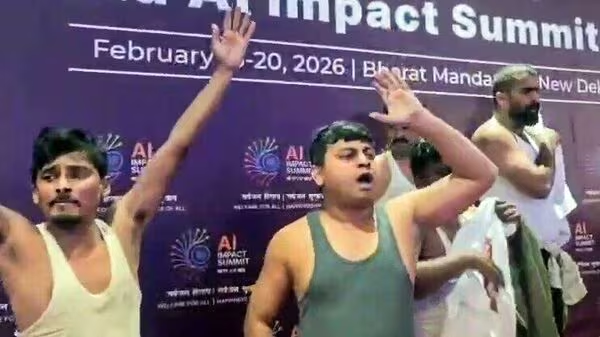
The AI Summit Protest has triggered a major political and legal debate after a Delhi court remanded four members of the Indian Youth Congress to police custody. The protest, which took place during the high-profile India AI Impact Summit in New Delhi, has raised serious concerns about public order, diplomatic protocol, and the limits of political dissent.
The incident unfolded at Bharat Mandapam, the venue hosting international delegates, policymakers, and technology leaders. The summit was designed to showcase India’s growing leadership in artificial intelligence, innovation partnerships, and global digital governance. However, the AI Summit Protest disrupted proceedings and shifted attention away from technological collaboration to political confrontation.
What Happened During the AI Summit Protest?
According to police reports, four Youth Congress workers allegedly entered the summit venue and staged a dramatic protest inside the premises. The demonstrators reportedly removed outer garments to reveal slogan-bearing T-shirts criticizing the government and raising objections to certain international policy positions.
Authorities immediately detained the protesters, citing security breaches and concerns over potential disruption in front of foreign dignitaries. The AI Summit Protest quickly became headline news, with political parties trading sharp accusations over the intent and impact of the demonstration.
Delhi Court’s Strong Observations: AI Summit Protest
The matter was heard at the Patiala House Court, where the judge took a firm stance. While acknowledging that the right to protest is protected under democratic principles, the court emphasised that such rights are not absolute—especially when exercised inside a high-security international event.
In its observations, the court reportedly stated that the AI Summit Protest went beyond legitimate dissent and posed a risk to public order. The judge further noted that the demonstration could have “imperilled the diplomatic image of the Republic” before foreign stakeholders. As a result, all four accused were sent to police custody for further investigation.
Police argued that custody was necessary to examine digital evidence, determine planning and coordination, and assess whether any larger conspiracy was involved. The court agreed that custodial interrogation was justified at this stage.
AI Summit Protest: Political Fallout Intensifies
The AI Summit Protest has triggered a political storm. The ruling party, the Bharatiya Janata Party, strongly condemned the demonstration, describing it as irresponsible and damaging to India’s global standing. BJP leaders alleged that the protest was designed to embarrass the country at a global platform meant to promote technological advancement.
On the other hand, the opposition defended the activists, arguing that peaceful protest is a constitutional right. Youth Congress representatives claimed the demonstration was symbolic and aimed at drawing attention to policy concerns. They questioned whether strong judicial remarks were proportionate to the nature of the protest.
This political polarization has made the AI Summit Protest more than just a law-and-order issue—it has evolved into a broader debate about democracy, dissent, and national image.
Why the AI Summit Protest Matters
The India AI Impact Summit is not just another conference. It represents India’s ambition to become a global hub for artificial intelligence innovation. With international investors, diplomats, and technology giants in attendance, the event carried significant diplomatic and economic weight.
In such a context, the AI Summit Protest raises important questions:
- Can protests inside high-security diplomatic venues be justified as free speech?
- Should political activism be restricted in international events?
- How should courts balance constitutional freedoms with diplomatic sensitivity?
Legal experts suggest that while protest is protected under Article 19 of the Constitution, reasonable restrictions apply in the interest of public order and national security. The court’s decision indicates that it viewed the protest as crossing into restricted territory due to the international nature of the event.
Security and Diplomatic Concerns
Security at global summits is typically stringent. Any breach—symbolic or otherwise—can create concerns among foreign delegates. The AI Summit Protest reportedly caught organizers off guard and prompted an immediate tightening of security protocols.
From a diplomatic standpoint, hosting global technology leaders requires projecting stability and institutional control. Critics argue that internal political disputes displayed at such forums may affect investor perception. Supporters of the protest, however, counter that mature democracies accommodate dissent without insecurity.
The AI Summit Protest has therefore become a case study in how emerging powers navigate domestic political contestation on global stages.
Legal Road Ahead: AI Summit Protest
The four accused remain in police custody pending further investigation. Their legal team is expected to pursue bail in subsequent hearings. The prosecution may seek to establish whether the demonstration involved premeditated coordination or external support.
If charges are framed formally, the case could set a precedent regarding protests inside internationally significant events. The AI Summit Protest may influence how future demonstrations are policed and legally interpreted in India.
Conclusion: AI Summit Protest
The AI Summit Protest has evolved from a brief demonstration into a significant political and judicial flashpoint. With the Delhi court taking a firm view on diplomatic sanctity and public order, the incident underscores the delicate balance between democratic freedoms and national image.
As India positions itself as a global AI powerhouse, events like this highlight the complexities of being both a vibrant democracy and a rising diplomatic force. The final legal outcome will determine whether the AI Summit Protest is remembered as a disruptive act of defiance or a landmark moment in defining the limits of protest at international forums.
FOR MORE BLOGS – beyondthepunchlines.com

Author: Team BTP

 Add to favorites