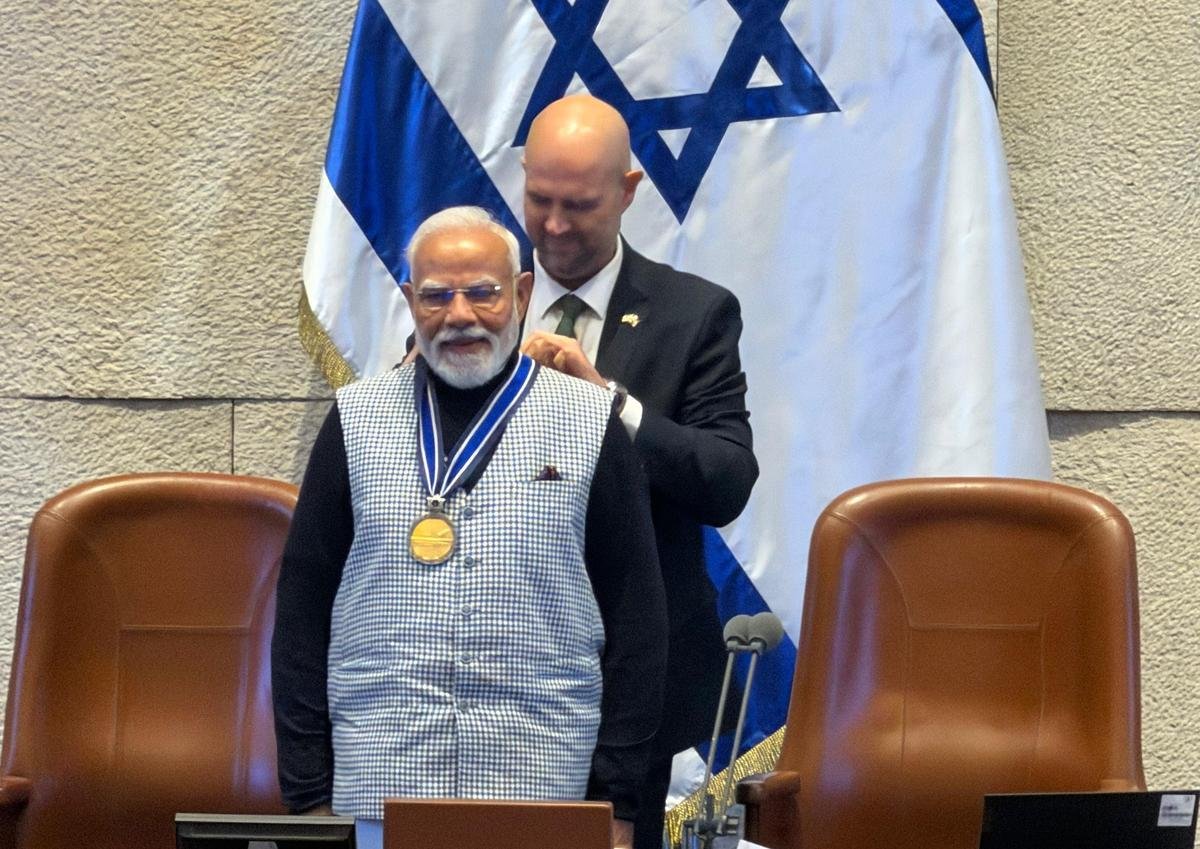
The PM Modi Israel Visit has drawn global attention as India reaffirmed its commitment to peace, stability, and dialogue in West Asia. During his historic address in Israel’s Parliament, Prime Minister Narendra Modi emphasized that the ongoing Gaza peace initiative carries the promise of a “just and durable peace” for the region. His remarks reflected India’s long-standing diplomatic approach—supporting Israel’s security concerns while advocating for a peaceful resolution of the Palestinian issue.
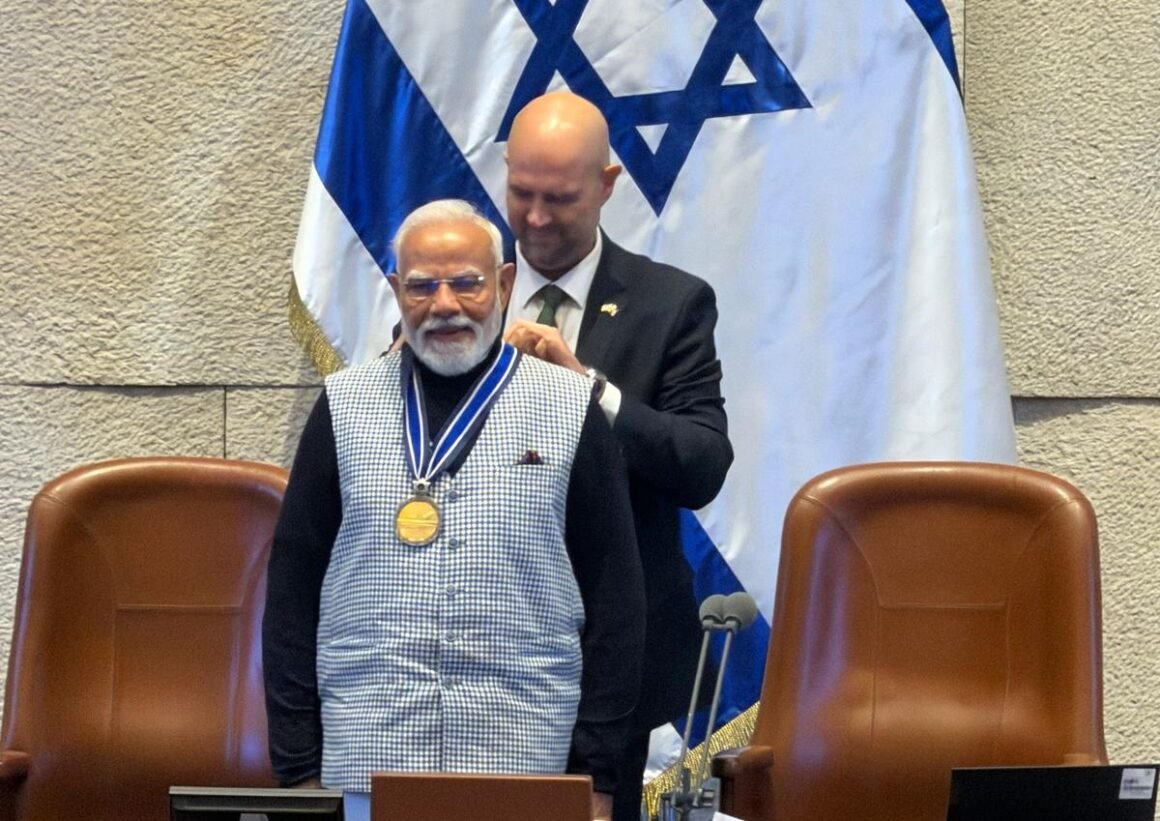
Historic Address at the Knesset
In a significant diplomatic moment, PM Modi addressed the Knesset, underlining shared democratic values between India and Israel. He reiterated that terrorism cannot be justified under any circumstances and called for global unity against extremist violence.
The PM expressed solidarity with Israeli citizens affected by recent conflicts, including the October 7 attacks, while also stressing the importance of humanitarian considerations in the broader regional crisis. The speech carefully balanced empathy, strategic clarity, and a forward-looking peace agenda.
Gaza Peace Initiative and India’s Position
Referring to the situation in Gaza, Modi stated that peace requires “dialogue, courage, and humanity.” The Gaza peace initiative, according to him, holds the potential to bring long-term stability not just to Israelis and Palestinians but to the entire Middle East.
India’s approach has historically supported a two-state solution—an independent Palestine living peacefully alongside Israel. During the PM Modi Israel Visit, this balanced stance was subtly reinforced. While strongly condemning terrorism, India also signaled that lasting peace can only be achieved through political dialogue and negotiated settlement.
Meeting with Israeli Leadership
PM Modi held high-level talks with Israeli Prime Minister Benjamin Netanyahu, focusing on defense cooperation, technology partnerships, agriculture innovation, and counter-terror collaboration.
Key areas of discussion included:
- Strengthening strategic defense ties
- Expanding technology and AI cooperation
- Enhancing water management and agricultural innovation
- Coordinating diplomatic efforts in the Middle East
India and Israel share a deepening strategic partnership that has grown significantly over the past decade. The PM Modi Israel Visit further consolidates this relationship at a time of geopolitical turbulence.
India’s Strategic Balancing in West Asia
India’s foreign policy in West Asia has evolved into a model of strategic multi-alignment. While maintaining robust defense and technological cooperation with Israel, India also nurtures strong energy and diaspora ties with Gulf nations.
This visit signals:
- India’s support for Israel’s security concerns
- Continued backing of Palestinian aspirations
- Advocacy for regional peace and stability
- Positioning India as a responsible global mediator
By highlighting the Gaza peace initiative without alienating either side, the PM Modi Israel Visit reinforces India’s image as a stabilizing power rather than a partisan actor.
Global and Domestic Reactions
The visit has sparked discussions both internationally and within India. Supporters view it as a demonstration of diplomatic maturity, projecting India as a global power capable of engaging in complex conflict zones. Critics argue that stronger humanitarian messaging regarding civilian suffering in Gaza could have been emphasized.
Nevertheless, from a geopolitical standpoint, the visit underscores India’s rising role in global diplomacy. As global power equations shift, India’s voice carries increasing weight in international forums.
Why This Visit Matters
The PM Modi Israel Visit comes at a critical time when the Middle East faces ongoing volatility. India’s economic growth, strategic partnerships, and diplomatic influence give it leverage to contribute meaningfully to peace efforts.
Key implications include:
- Deepening India-Israel defense cooperation
- Expanding innovation-driven partnerships
- Enhancing India’s credibility as a global peace advocate
- Strengthening India’s diplomatic footprint in West Asia
India’s outreach reflects a broader foreign policy vision—engage all, align selectively, and promote dialogue over confrontation.
The Road Ahead
The Gaza conflict remains complex, with humanitarian, political, and security dimensions intertwined. While immediate resolution appears challenging, diplomatic interventions and multilateral cooperation remain essential.
The PM Modi Israel Visit signals India’s willingness to participate constructively in shaping peace narratives. By calling for a “just and durable peace,” Modi positioned India not just as a strategic ally of Israel but also as a responsible global stakeholder committed to stability.
In an era of shifting alliances and rising geopolitical tensions, India’s calibrated messaging during this visit may define its diplomatic posture in West Asia for years to come
FOR MORE BLOGS – beyondthepunchlines.com

Author: Team BTP

 Add to favorites