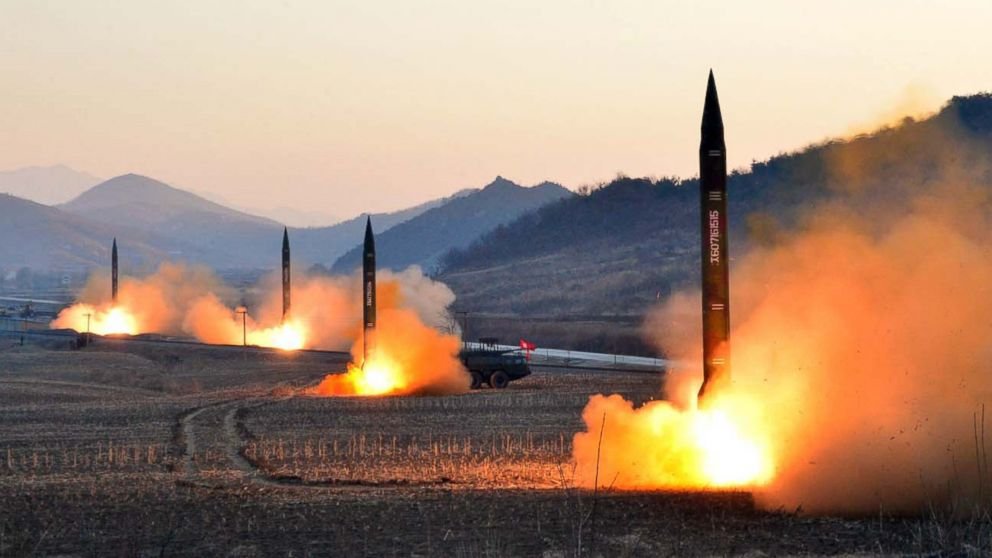
North Korea missile test under Kim Jong Un showcases the growing military might, sending shockwaves through East Asia and global security circles.
On December 28, 2025, North Korean leader Kim Jong Un personally oversaw the test launch of long-range strategic cruise missiles, marking another demonstration of Pyongyang’s advancing military capabilities. The state media reported that multiple missiles were successfully launched and hit their intended targets over the western sea, highlighting the growing range and precision of North Korea’s strategic forces.
Details of the Missile Test
According to the Korean Central News Agency (KCNA), the launch aimed to verify the reliability, rapid response, and operational readiness of North Korea’s missile systems. Kim expressed “great satisfaction” with the results and emphasized that such drills are essential for maintaining combat readiness in the face of perceived external threats.
The test involved multiple cruise missiles launched from the Sunan area in Pyongyang, following pre-planned trajectories before impacting designated targets. The exercise was portrayed as a routine check to ensure North Korea’s strategic deterrent capability remains robust and reliable.
International Monitoring and Reactions
The South Korean military confirmed detecting the launches, stating that the missiles flew as planned and impacted their targets over the western sea. Seoul warned that further missile tests might occur before the end of the year, reflecting the continuing pattern of North Korea’s military demonstrations.
While Pyongyang frames these tests as defensive exercises, international observers, including the United States and regional neighbors, view them as provocative. Long-range cruise missiles, although not explicitly banned under U.N. sanctions like ballistic missiles, pose serious security risks due to their stealth, speed, and potential to carry both conventional and nuclear payloads.
Strategic Implications: North Korea missile test
The December 28 test is part of a broader series of military demonstrations by North Korea in late 2025, including submarine developments and ballistic missile trials. Analysts suggest these exercises serve multiple purposes:
- Strengthening North Korea’s strategic deterrent and military credibility.
- Sending a political message ahead of the ninth Workers’ Party Congress scheduled for early 2026.
- Reinforcing Pyongyang’s negotiation leverage in potential talks on sanctions and international security.
Regional Security Concerns
The North Korea missile test has heightened tensions across East Asia, particularly with South Korea, Japan, and the United States, who continue strategic military cooperation in the region. North Korea’s expanding missile capabilities could complicate defence planning, early warning systems, and regional stability. Analysts warn that the continued development of long-range and stealth-capable cruise missiles may allow North Korea to bypass traditional missile defence systems, further challenging regional security.
Conclusion: North Korea missile test
North Korea’s latest cruise missile test under Kim Jong Un demonstrates Pyongyang’s determination to advance its military capabilities. While the regime emphasizes the defensive and routine nature of these drills, the strategic implications for East Asia and global security are significant. As tensions remain high, regional powers are closely monitoring developments, highlighting the delicate balance between deterrence, diplomacy, and security in the Korean Peninsula.
FOR MORE BLOGS – beyondthepunchlines.com

Author: Team BTP

 Add to favorites