U.S. strike in Nigeria: When Washington strikes thousands of miles away, the tremors are felt far beyond the battlefield.
U.S. Confirms Airstrike on Islamic State Targets
The United States has confirmed that it carried out a precision airstrike against Islamic State (ISIS) militants in northwest Nigeria, marking a rare but significant escalation of American military involvement in West Africa. The strike, conducted in coordination with Nigerian authorities, targeted extremist hideouts in Sokoto state, a region that has witnessed rising militant violence in recent months.
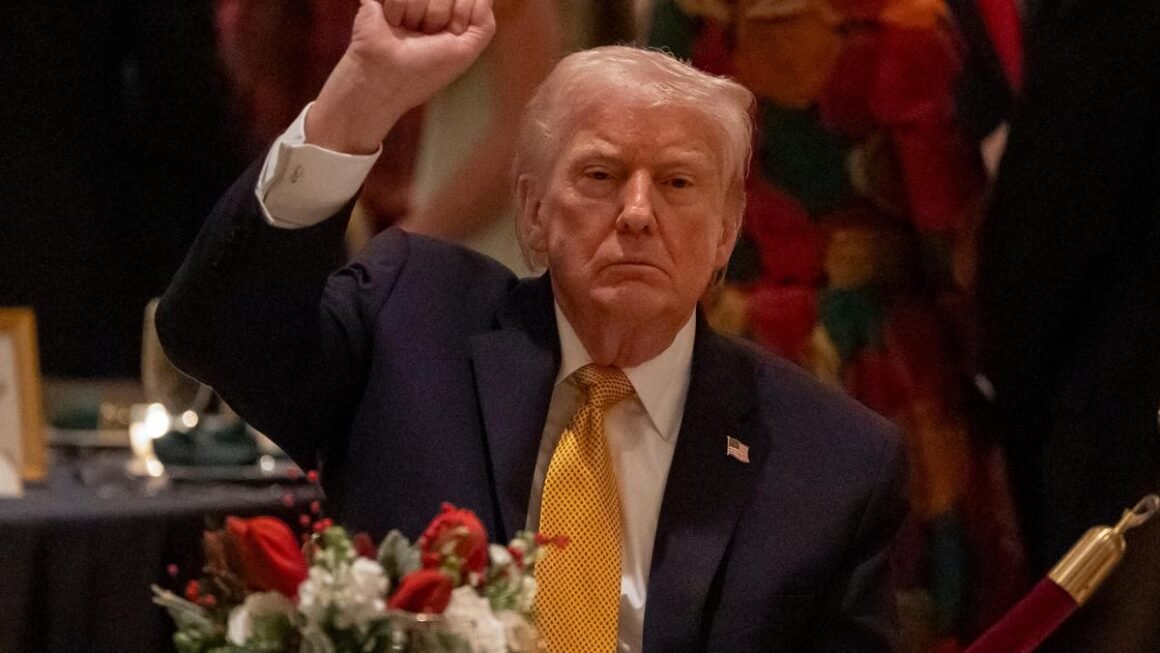
The operation was publicly acknowledged by U.S. President Donald Trump, who described the action as decisive and necessary to neutralise terrorists responsible for repeated attacks on civilians, particularly Christian communities.
Why Northwest Nigeria Matters: U.S. strike in Nigeria
While global attention has largely focused on ISIS operations in the Middle East and parts of the Sahel, northwest Nigeria has quietly emerged as a new flashpoint for Islamic State–linked militants. Armed groups operating in this region have exploited weak governance, porous borders, and longstanding local conflicts to expand their influence.
Security analysts say these militants often blend into bandit networks, making them harder to track and allowing extremist ideology to spread under the cover of criminal activity.
Trump’s Statement and U.S. Justification
Announcing the strike, President Trump said the attack was ordered “to eliminate ISIS terrorists who have been slaughtering innocent people”, adding that the U.S. would not hesitate to act when American intelligence confirms credible threats.
According to the U.S. Africa Command (AFRICOM), the strike was:
- Conducted at the request of Nigerian security forces
- Based on actionable intelligence
- Aimed at degrading Islamic State’s operational capacity in the region
AFRICOM also stated that multiple militants were killed, though an exact number was not disclosed.
Nigeria–U.S. Security Cooperation
Nigerian officials acknowledged the strike as part of broader counterterrorism cooperation with the United States. Intelligence sharing, surveillance support, and targeted operations have long formed the backbone of bilateral security ties, particularly against Boko Haram and Islamic State–West Africa Province (ISWAP).
However, the Nigerian government has remained cautious in its public messaging, emphasising that security challenges in the country affect both Muslim and Christian communities, and warning against framing the violence solely through a religious lens.
Civilian Safety and Regional Impact
As with any foreign military action, concerns have been raised about civilian casualties and long-term stability. U.S. officials maintain that the strike was carefully planned to minimise collateral damage, but independent verification remains limited.
Regional experts argue that while airstrikes can disrupt militant leadership, they must be accompanied by:
- Strong local policing
- Economic development in conflict-prone areas
- Deradicalisation and community engagement
Without these, they warn, militant groups often regroup under new leadership.
A Message Beyond Nigeria
The strike sends a broader geopolitical signal. It underscores Washington’s willingness to confront Islamic State affiliates wherever they operate, even in regions that rarely dominate international headlines.
For extremist groups, the message is clear: geographical distance no longer guarantees immunity. For African governments, the operation highlights both the benefits and limits of external military support.
What Comes Next: U.S. strike in Nigeria
In the short term, Nigerian security forces are expected to intensify ground operations in northwest regions to prevent retaliatory attacks. In the longer term, the success of the U.S. strike will be judged not by militant casualties alone, but by whether it helps restore lasting security for civilians.
As Islamic State adapts its strategy across continents, the challenge for both Nigeria and its international partners remains the same — how to defeat extremism without deepening instability.
FOR MORE BLOGS – beyondthepunchlines.com

Author: Team BTP

 Add to favorites