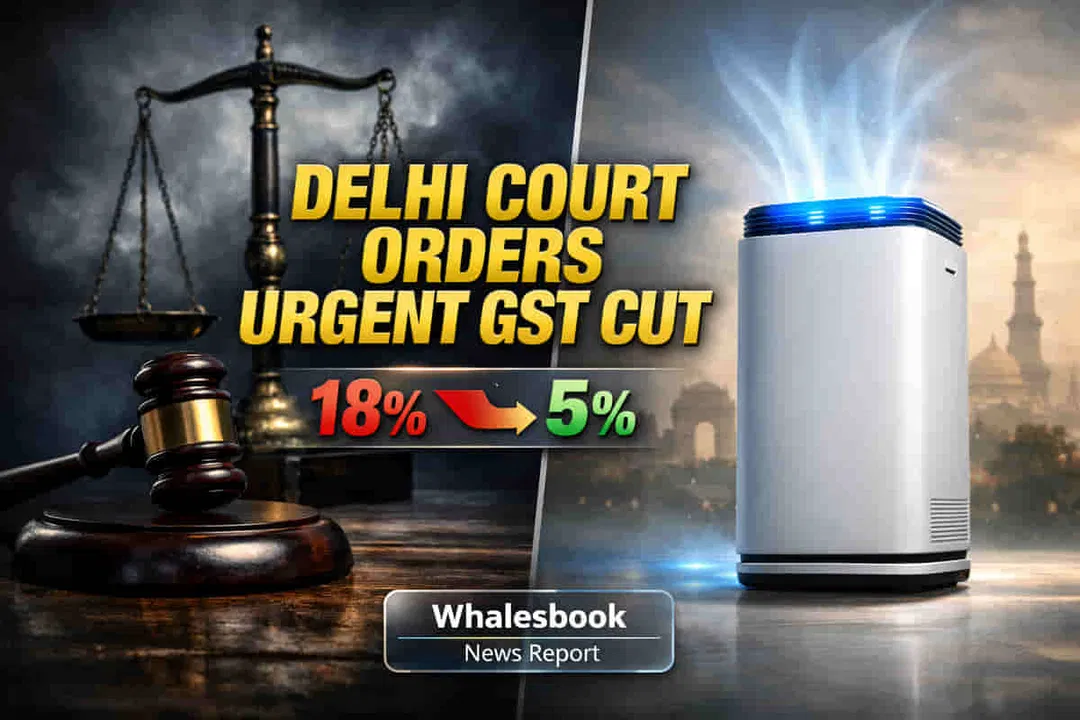
In the battle against Delhi’s toxic air, the High Court asks why life-saving air purifiers should remain a luxury taxed at 18%.
The Delhi High Court has taken a strong stand on public health and taxation, directing the GST Council to consider reducing or exempting the Goods and Services Tax (GST) on air purifiers. Amid some of the worst air quality levels in Delhi-NCR, the court stressed that clean air is a basic necessity, and taxing air purifiers at 18% makes them unaffordable for the average citizen.
The Legal Context
A Public Interest Litigation (PIL) argued that air purifiers should be classified as medical devices under the Medical Devices Rules, 2017, which would qualify them for a 5% GST rate instead of the current 18%. The High Court noted that authorities had failed to take timely action, despite recurrent hazardous air quality levels in the city.
Key Observations from the Court
- The bench questioned why citizens are forced to pay the highest tax rate on devices that protect health, especially when the government cannot ensure clean air.
- Emphasized that clean air is fundamental, likening access to air purifiers to access to medical essentials.
- Suggested that the GST Council meet urgently to review the taxation policy on air purifiers and consider classifying them as essential or medical devices.
Why This Matters
Delhi’s air pollution has repeatedly crossed hazardous levels, impacting millions, especially children, the elderly, and patients with respiratory issues. With PM2.5 and PM10 levels reaching alarming numbers every winter, air purifiers have become essential for home and office safety. However, the 18% GST keeps these devices expensive, limiting access to middle and lower-income households.
Proposed Solutions
- Reclassify air purifiers as medical devices: This would immediately bring down the GST to 5%.
- Provide temporary GST relief: Amid the pollution crisis, a temporary cut could make purifiers affordable before the next winter season.
- Policy oversight: The court has urged the GST Council to report when it can convene to address this urgent public health concern.
Expert Opinions
Environmental and tax policy experts have welcomed the court’s intervention:
- Dr. Neha Sharma, Air Quality Analyst: “Air purifiers are not luxury items in Delhi; they are essential protective devices. Tax relief would encourage wider usage and reduce health risks.”
- Tax Law Expert Ravi Mehta: “The High Court’s suggestion aligns with public interest. Legally, classifying air purifiers as medical devices is feasible and would significantly reduce the GST burden.”
Broader Implications
- Could set a precedent for other health-related devices facing high taxation.
- Signals judicial activism where public health intersects with fiscal policy.
- Highlights the urgency of addressing air pollution not just through regulation but also by making mitigation tools accessible.
Conclusion
The Delhi High Court has put the GST Council on notice, making it clear that citizens cannot be expected to pay a premium for protection against toxic air. Whether through lower taxes or reclassification as medical devices, this order may pave the way for more affordable solutions to Delhi’s pollution crisis, balancing fiscal policy with public health imperatives.
FOR MORE BLOGS – beyondthepunchlines.com

Author: Team BTP

 Add to favorites


