Bangladesh unrest sparks an India diplomatic face-off as protests cross borders and pressure mounts
When unrest crosses borders, diplomacy becomes the first casualty. What began as outrage over violence in Bangladesh has now escalated into a full-blown diplomatic standoff with India, with angry protests spilling onto the streets of Kolkata and other Indian cities.
The trigger has been a series of violent incidents in Bangladesh, including the lynching of a Hindu man, which ignited protests by community groups, activists, and political organisations. As images and videos spread rapidly on social media, public anger crossed the border, placing bilateral relations between India and Bangladesh under intense strain.
Bangladesh unrest, India diplomatic face-off: Protests erupt in Kolkata
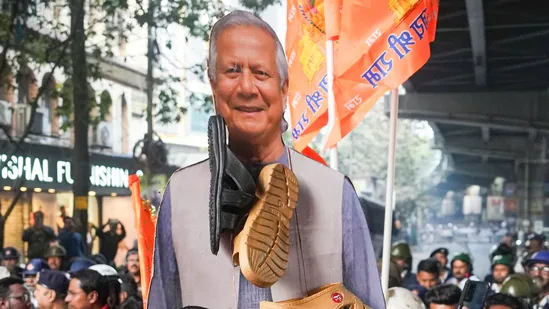
Kolkata emerged as a focal point of protest as demonstrators gathered outside the Bangladesh Deputy High Commission. Protesters raised slogans, waved placards, and demanded stronger action to protect minorities in Bangladesh. Police were deployed in large numbers to prevent escalation, detaining several demonstrators as tensions ran high.
The protests were not limited to Kolkata. Similar demonstrations were reported in Delhi and other cities, reflecting how deeply the unrest in Bangladesh has resonated across India.
Diplomatic Tensions Escalate
As protests intensified, Bangladesh formally raised concerns with India over the security of its diplomatic missions. Dhaka urged New Delhi to ensure protection under international diplomatic norms, warning that attacks or threats against missions could worsen the situation.
In response to security concerns, Bangladesh suspended visa and consular services at some of its missions in India. The move signalled how quickly public unrest had translated into diplomatic disruption, affecting ordinary citizens and cross-border travel.
Bangladesh unrest India diplomatic face-off: India Responds
India conveyed its concerns to Bangladeshi authorities over the safety of religious minorities, calling for swift justice and accountability. Indian officials emphasised the need to uphold law and order and ensure that mob violence does not go unpunished.
New Delhi also reiterated its commitment to protecting diplomatic premises within India, even as protests continued under tight security.
Bangladesh unrest India diplomatic face-off: Unrest Inside Bangladesh
The diplomatic row reflects deeper turmoil within Bangladesh itself. Alongside the lynching case, Bangladesh has witnessed political protests, clashes involving youth groups, and attacks on media offices. Critics argue that rising intolerance and delayed justice have fuelled public anger, both domestically and abroad.
Human rights observers warn that continued instability could undermine Bangladesh’s image as a moderate and pluralistic society, while also complicating its regional relationships.
Bangladesh unrest India diplomatic face-off: Impact on Bilateral Relations
India and Bangladesh share deep ties across trade, security, culture, and people-to-people exchanges. However, the current unrest has exposed fault lines that could impact cooperation if tensions are not defused quickly.
Suspension of visa services, street protests, and diplomatic exchanges have already begun to affect travel, students, and businesses that depend on smooth cross-border engagement.
Bangladesh unrest India diplomatic face-off: A Test for Diplomacy
As emotions run high, both governments face a delicate challenge: addressing public anger without allowing the situation to spiral further. Diplomats stress that restraint, communication, and credible action on the ground will be crucial in restoring calm.
Bangladesh unrest, India diplomatic face-off: Beyond Headlines
For many observers, the crisis is about more than one incident. It raises broader questions about minority protection, the power of misinformation, and how domestic unrest can rapidly evolve into international tension.
Unless accountability is swift and dialogue sustained, the unrest threatens to leave a lasting scar on one of South Asia’s most important bilateral relationships.
FOR MORE BLOGS – beyondthepunchlines.com

Author: Team BTP

 Add to favorites