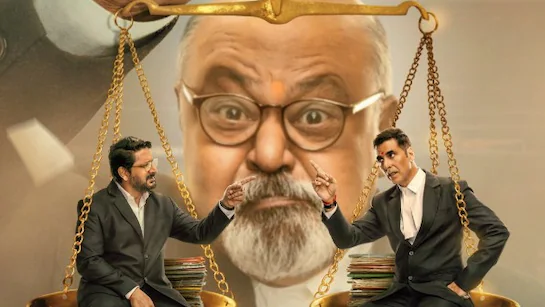
A courtroom comedy that takes birth from one of Uttar Pradesh’s bloodiest land wars—this is where reel meets reality.
A Protest That Shook Uttar Pradesh Before Bollywood Picked It Up
Long before Jolly LLB 3 hit the screens, the villages of Bhatta and Parsaul in Greater Noida, Uttar Pradesh had already scripted pain, resistance, and betrayal. In May 2011, farmers there were compelled to sell their land to the government at ridiculously low prices for projects affiliated with the Yamuna Expressway. The prices quoted were ridiculously low—simply ₹800–₹1,000 per square meter, while developers subsequently sold the same land for over ₹20,000 per square meter.
This was followed by one of the most intense farmer agitations in recent UP history. There were confrontations between villagers and police on May 7, 2011, resulting in the deaths of at least two individuals, including 16-year-old Ram Singh, and over fifty injured. Scores were arrested, and villagers reported security forces’ brutalities including the sexual abuse of women—charges that were afterward partially substantiated in NHRC and NCW investigations but rejected by state officials as exaggerated. The demonstrations escalated into national controversy when Rahul Gandhi attempted to go to the village, was detained by police, and turned the scandal into a political firestorm in Delhi. Activists like Arvind Kejriwal also rode the agitation to make the point against corruption, raising the stakes even higher.
The Bhatta Parsaul incident led to national policy changes that eventually resulted in the 2013 Land Acquisition, Rehabilitation and Resettlement (LARR) Act. The act ensured better compensation, consent of landowners as a prerequisite, and rehabilitation activities.
However, over a decade after that, farmers in UP continue to protest about delays, unjustified rates, and displacement sans rehabilitation, and thus show that the struggle which informed the movie is still not over.
How Jolly LLB 3 Brought the Real Story to the Big Screen
Released on September 19, 2025, Jolly LLB 3 dramatizes all of these with names changed, place changed, but the essence intact. The film places its drama in a village of Rajasthan called Parsaul, a clear reference to the site of the actual protest.
At the heart of the film’s emotional core is Rajaram Solanki, a widowed elderly farmer and poet who takes his own life after being compelled to yield his ancestral land to billionaire Haribhai Khetan, menacingly portrayed by Gajraj Rao. His widow, Janki Amma (Seema Biswas), approaches the courts seeking justice. She finds ally in Jolly Tyagi (Arshad Warsi), the small-time, jugadu lawyer with a heart of gold. Facing him is Jolly Mishra (Akshay Kumar), the suave lawyer who initially takes on Khetan before finding out the truth and turning.
The court trial, led by Judge Tripathi (acted by Saurabh Shukla), is a mix of gallows humor, wit, and cutting put-downs that capture the sheer absurdities and tragedies of India’s judicial system. The final victory of the villagers, marked by the destruction of hoardings of Khetan’s mega-project and the slogan of Jai Jawan Jai Kisan, captures the spirit of resistance that shook UP in 2011, although the real-life verdicts were far more complex.
Rajaram Solanki: Fictional Farmer, Real Symbol
Rajaram Solanki does not have a counterpart in Bhatta Parsaul’s history, but his life and death are taken from the plight of actual farmers. His despair is such as that of the families who lost sons and fathers in the confrontation, his widow such as the women who continued to fight through stigma and trauma, and his poetry such as the manner in which many farmers spoke about their land as their “soul” and “identity.”
The suicide depicted in the film is not a direct representation of an individual, but it speaks to the wider farmer suicides that struck UP and India during the early 2010s, when tens of thousands throughout the nation were killing themselves out of debt, dispossession, and betrayal. Through the making of Rajaram, the filmmakers impart a single face and voice to a mass tragedy.
From Real Clashes to Reel Courtroom
What the film does cleverly is transform the brutality of Bhatta Parsaul into a courtroom satire that is both palatable and provocative. The nexus of builders and politicians, which farmers accused of profiteering in 2011, is reflected in Haribhai Khetan’s smooth corruption. The charges of police atrocities are symbolically depicted in the toned-down lathicharge sequence, yet it is still not too hard to grasp state brutality. Even slogans heard in the movie are straight from real life, villagers’ cries of “Jai Jawan Jai Kisan” wafting through the summer air during those tense days of 2011.
In real life, farmers approached the Allahabad High Court with their complaints, and several petitions lingered for years. In reel life, it is justice that comes quickly through one trial, giving audiences the catharsis the real villagers never enjoyed. This juxtaposition of reel justice and real injustice is what causes the message in this film to outlast the laughter.
Box Office and Audience Response
Jolly LLB 3 has reaped the benefits of its real-case connection. Opening strongly with ₹50.5 crore over its first weekend, it has become one of the highest-grossing courtroom dramas in India. Audiences have connected with its dual nature—entertainment wrapped around a burning social issue. For rural audiences, it validated their ongoing grievances. For urban viewers, it revived memories of a protest that many had forgotten after the headlines faded.
Why the Bhatta Parsaul Angle Still Matters Today
The story of Bhatta Parsaul was not finished in 2011, and therefore the film continues to be pertinent even in 2025. The farmers of Uttar Pradesh are once more upset over land acquisition for big projects like the Jewar Airport and industrial corridors. The complaints ring eerily familiar: sub-market price compensation, poor rehabilitation, and bullying by officials. Even the law that sought to prevent such injustices, the LARR Act of 2013, is often side-stepped or diluted.
By approaching this subject, Jolly LLB 3 does not only entertain but also reopened public discourse regarding how India addresses development and displacement. It reminds people that progress based on injustice cannot go unopposed, and that the price of turning a deaf ear to farmers’ voices is paid in rupees, but also lives.
Cinema’s Justice vs Reality’s Silence
Jolly LLB 3 demonstrates that film can be both laughter and tears. Having its roots firmly in the actual struggle of Bhatta Parsaul, the film makes sure that a generation too young to have memory for 2011 knows the stakes of land, law, and livelihood in India.
Rajaram Solanki is a fictional character, yet he represents every single farmer of Uttar Pradesh whose land was acquired in the name of development. The irony is that while cinema can bring justice in 157 minutes, the actual farmers of Bhatta Parsaul are waiting even fourteen years after that.
That is why Jolly LLB 3 is important—not as a movie, but as a reminder of one case in which reel life points to the shortcomings of real life.
FOR MORE BLOGS – beyondthepunchlines.com

Author: Anjali Pandey

 Add to favorites