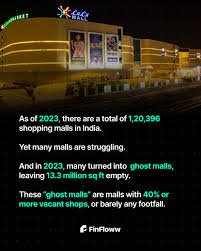
Malls were supposed to be India’s new “third space” — places where people gathered not just to shop, but to spend time, build community, and enjoy experiences. Instead, many malls have turned into lifeless concrete boxes, chasing consumption without offering culture or connection. Today, India is seeing the rapid rise of ghost malls — malls with 40% or more vacant shops, or barely any footfall.
The Scale of the Problem
- As of 2023, India had over 1,20,396 shopping malls across the country.
- But many are struggling — with 13.3 million sq ft lying vacant in 2023 alone.
- According to Knight Frank, around 64 malls in 8 major cities are ghost malls, representing over ₹6,700 crore in value loss.
Why Are Malls Turning Into Ghost Malls?
1. Changing Consumer Habits
E-commerce has revolutionized shopping. Consumers now prefer the convenience of online purchases, reducing mall footfalls. Add to that the pandemic’s long-term effects — people are now more selective about stepping out.
2. High Operating Costs
Malls are usually built in prime urban locations. The rents, maintenance, and infrastructure costs are enormous. When underperformance sets in, these costs become unbearable, forcing retailers to shut shop.
3. Poor Location & Design
Not all malls were built equal. Many smaller or mid-sized malls lack proper parking, connectivity, or upkeep. These poorly designed spaces drive customers away, leaving them half-empty.
4. Oversupply of Malls
In the rush of India’s retail boom, developers built more malls than the market could sustain. This oversupply has led to intense competition, with weaker malls losing out.
Consequences of Ghost Malls
- Urban Blight: Empty malls become eyesores and reduce neighborhood appeal.
- Economic Loss: Thousands of jobs in retail, security, and maintenance are at risk.
- Value Destruction: Investors and developers face massive financial losses.
What Could the Future Look Like?
The collapse of malls doesn’t mean the end of retail — it means the need for reinvention. Developers and city planners are already exploring:
- Mixed-Use Spaces: Converting malls into offices, co-working hubs, or housing.
- Experience-Driven Retail: Cinemas, food courts, entertainment zones, and cultural events.
- Community-Centric Models: Reimagining malls as urban community hubs, not just shopping centers.
Conclusion
Ghost malls are a symptom of India’s evolving consumer culture. The future of Indian retail will not be about building more malls, but rethinking what malls should represent — a balance between commerce, community, and culture.
FOR MORE BLOGS – beyondthepunchlines.com

Author: Team BTP

 Add to favorites