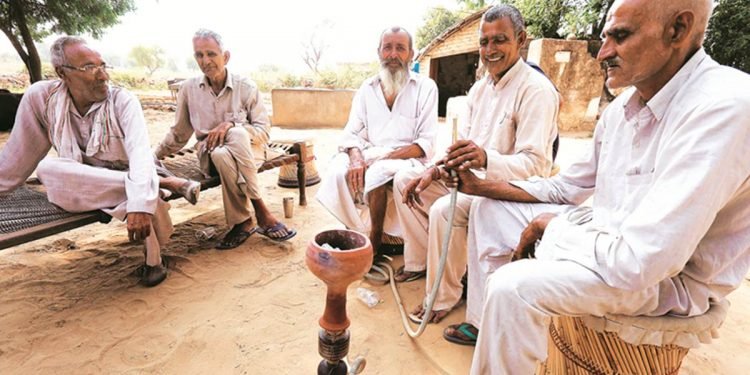
That’s a fascinating observation—and one that opens up an interesting debate on traditional habits, lifestyle, and longevity in rural India. Here’s a nuanced look at why many elderly villagers who smoke hookah (huqaah) seem to live long and healthy lives despite modern warnings against tobacco use:
Hookah, Hills, and Health: The Paradox of Long-Living Indian Villagers
“If huqaah was deadly, our grandfathers wouldn’t have seen 90,” is a line you’ll hear often in Indian villages. In contrast to urban health anxieties, many elderly villagers—despite puffing away at their daily hookah—continue to till fields, climb hills, and live past 80 with minimal medical intervention. What gives?
It’s Not Just the Huqaah—It’s the Lifestyle
Rural lifestyle factors often offset the harmful effects of huqaah:
Physically active lives (farming, walking, manual work)
Fresh, homegrown food (unprocessed, seasonal, and organic)
Lower stress levels (slower pace of life, strong community ties)
Cleaner air (except for the smoke they inhale, ironically)
These factors contribute more to longevity and wellness than just the presence or absence of tobacco.
What’s in the Hookah? Not Always Tobacco
Unlike flavoured hookah in cities, many villagers use:
Dried herbs, local tree bark, or light tobacco mixed with jaggery and molasses
Often fewer chemical additives than cigarettes or modern tobacco products
Genetics, Resilience & Adaptation
Villagers may have:
Stronger genetics due to centuries of agrarian endurance
Natural immunity developed over time through exposure
Adaptive resilience to local environmental stressors
But this doesn’t mean hookah is harmless—it means their bodies are better equipped to withstand its impact.
The Medical Reality: Hookah Still Harms
Scientific evidence is clear:
Hookah contains nicotine, carbon monoxide, and carcinogens
Long-term use increases risk of lung disease, oral cancer, heart disease
So, while some individuals live long despite smoking, it’s not because of the hookah—but in spite of it.
Survivor Bias and Cultural Narratives
The elders you see are the ones who survived, but many others may have:
Died young from smoking-related issues
Suffered in silence due to lack of medical access
This creates a “survivor bias”, where only the healthy examples are remembered, skewing perception.
Should We Celebrate or Caution?
Hookah may be a part of rural tradition, but it is not a health elixir. The longevity of Indian villagers likely comes from a holistic lifestyle—nutritious food, physical work, community life—not from huqaah smoke.
> Modern takeaway: Learn from their lifestyle, not their vices.
FOR MORE BLOGS –beyondthepunchlines.com

Author: Nitin mittal
CA by qualification

 Add to favorites