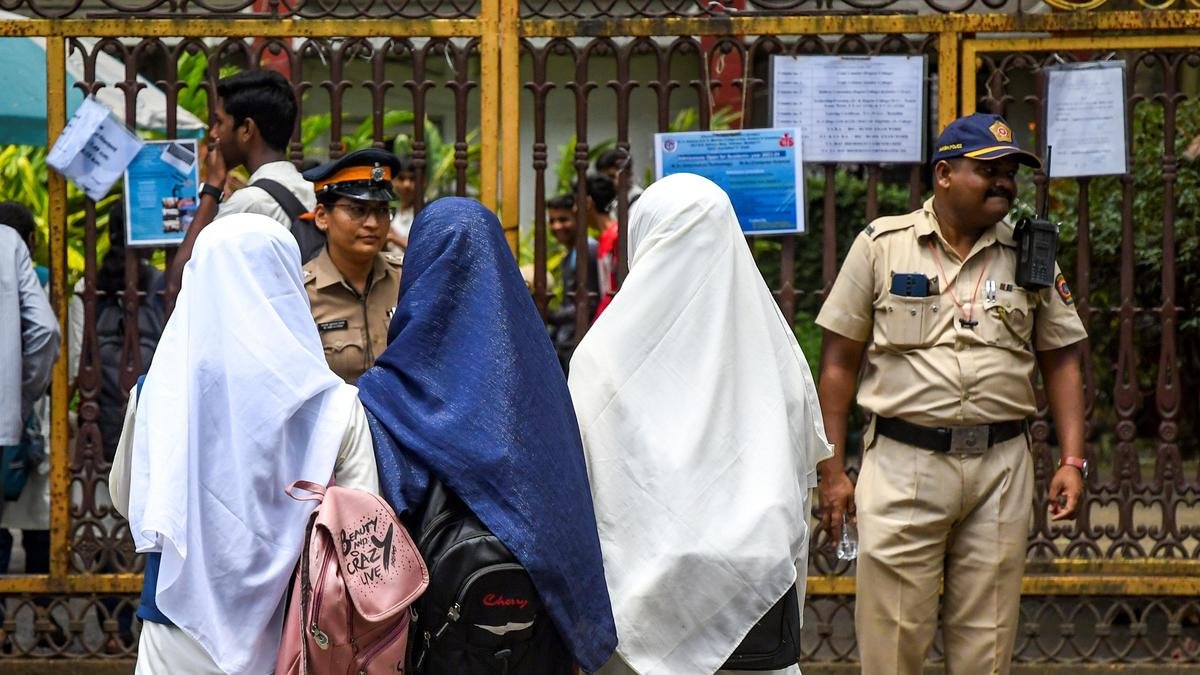
5% Muslim Reservation Scrapped in Maharashtra: A long-dormant quota policy is formally withdrawn, reigniting discussions on constitutional boundaries and social justice.
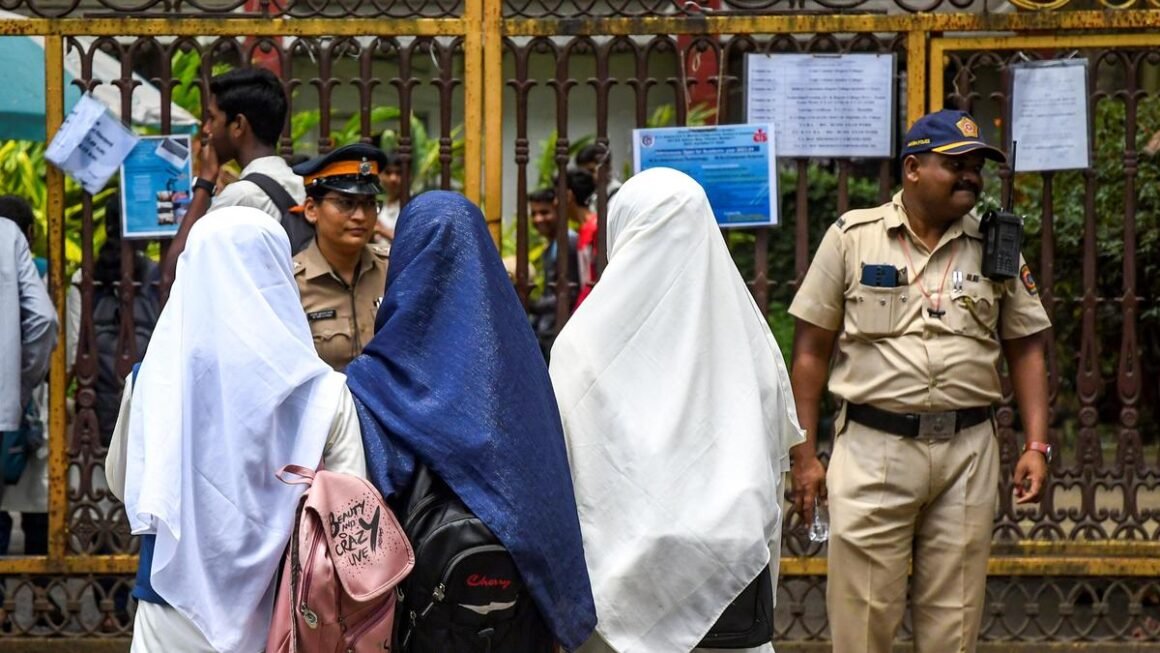
The government of Maharashtra has officially revoked the 5% reservation previously announced for sections of the Muslim community in educational institutions and public sector employment. The decision, issued through a fresh Government Resolution (GR), formally nullifies a 2014 ordinance that had remained legally contested and administratively inactive for nearly a decade.
While the move is being described by the current administration as a procedural correction and legal clarification, it has simultaneously reignited intense political debate regarding affirmative action, minority welfare, and the constitutional framework governing reservations in India.
Historical Background of the Policy
The 5% Muslim Reservation Scrapped in Maharashtra was introduced in 2014 by the then Congress-NCP coalition government. The quota was granted under a Special Backwards Category (SBC), based on findings that certain Muslim communities in the state were socially and educationally disadvantaged.
The objective of the policy was to extend benefits in:
- Admissions to educational institutions
- Recruitment in government departments
- Opportunities in semi-government establishments
The ordinance was introduced shortly before the state elections, which further intensified political scrutiny. Soon after its announcement, the measure faced legal challenges in the Bombay High Court. The judiciary questioned the constitutional validity of a religion-linked quota and subsequently stayed its implementation.
Importantly, the ordinance was never converted into a permanent legislative enactment. As a result, it lapsed automatically over time. Despite this, certain administrative references to the quota continued to exist, creating ambiguity in policy interpretation.
Government’s Rationale for Revocation
The present Maharashtra government has clarified that the recent decision does not abolish an operational quota but merely removes a defunct and legally unenforceable provision from official records.
5% Muslim Reservation Scrapped in Maharashtra
- The 2014 ordinance was temporary and not ratified into law.
- Judicial intervention prevented its sustained implementation.
- The provision had no enforceable legal status.
- Administrative alignment was necessary to eliminate confusion.
By issuing the new Government Resolution, the state has formally withdrawn recognition of the 5% Muslim reservation framework.
Consequently:
- No new admissions will be granted under this category.
- No fresh caste validity or backward category certificates will be issued.
- Recruitment under this classification stands discontinued.
Officials have emphasized that the decision is rooted in legal prudence rather than ideological positioning.
Constitutional Dimensions and Legal Context
India’s reservation architecture is primarily grounded in social and educational backwardness rather than religious identity. Articles 15 and 16 of the Constitution permit affirmative action for socially and educationally backward classes, Scheduled Castes (SC), and Scheduled Tribes (ST).
However, the Supreme Court has consistently maintained that reservations cannot be extended solely on religious grounds without empirical evidence demonstrating backwardness.
Several constitutional parameters frame this debate:
- The 50% reservation ceiling established in the Indra Sawhney judgment (1992).
- The necessity of quantifiable data to justify backward status.
- The principle of equality under Article 14.
Critics of religion-based quotas argue that affirmative action must be based on objective socio-economic criteria rather than faith affiliation. Conversely, proponents maintain that certain minority communities face structural disadvantages that warrant targeted intervention.
The Maharashtra decision, therefore, reinforces the constitutional tension between social justice initiatives and judicial limitations.
Political Reactions and Divergent Perspectives
Opposition parties have criticised the move, characterising it as regressive and detrimental to minority welfare. They argue that segments of the Muslim population in Maharashtra continue to face socio-economic marginalisation and require institutional support.
Supporters of the government’s decision contend that reservations must adhere strictly to constitutional norms. They assert that public policy cannot be structured on religious lines and must be defensible before judicial scrutiny.
This divergence reflects broader ideological differences regarding:
- The scope of affirmative action
- Minority rights versus constitutional neutrality
- Electoral politics and welfare policymaking
The controversy has amplified discourse around inclusivity, equity, and governance priorities.
Socio-Economic Implications
Although the 5% quota had not been fully operational for years due to legal obstacles, its formal withdrawal removes any residual expectation of revival under the 2014 framework.
For students and employment aspirants, the immediate practical impact may be limited, given the policy’s dormant status. However, symbolically, the decision holds significant weight in the discourse surrounding minority empowerment.
It also underscores the evolving approach of state governments toward reservation policy—shifting from politically expedient announcements to legally sustainable frameworks.
Broader Policy Considerations
The Maharashtra episode highlights several larger questions confronting India’s reservation system:
- Should affirmative action be religion-neutral but data-driven?
- How should backwardness be defined and measured?
- Is socio-economic criteria a preferable alternative to identity-based classification?
- Can states innovate within constitutional boundaries to address minority disadvantage?
Increasingly, policymakers are exploring economically weaker section (EWS) frameworks and caste-based surveys to rationalize welfare distribution.
The scrapping of the Muslim quota may influence policy deliberations in other states contemplating similar measures.
Governance, Law, and Social Justice
At its core, the development represents a convergence of governance accountability and constitutional discipline. By formally withdrawing a lapsed provision, the state government has attempted to ensure administrative clarity.
However, the broader socio-political narrative cannot be ignored. For some, the decision symbolizes adherence to constitutional orthodoxy. For others, it signifies a missed opportunity to address minority underrepresentation.
The intersection of law, policy, and social equity remains complex and multifaceted.
Conclusion
The formal scrapping of the 5% Muslim reservation in Maharashtra closes a legally uncertain chapter that began in 2014. While the quota had long been inactive due to judicial constraints, its official revocation carries both symbolic and political implications.
The development reopens fundamental debates about affirmative action, constitutional validity, and the future direction of India’s reservation policy. Whether viewed as a necessary legal correction or a contentious political move, the decision underscores the delicate balance between social justice initiatives and constitutional safeguards.
As discussions continue, the Maharashtra case may serve as a reference point in shaping future reservation discourse across the country.
FOR MORE BLOGS – beyondthepunchlines.com

Author: Team BTP

 Add to favorites