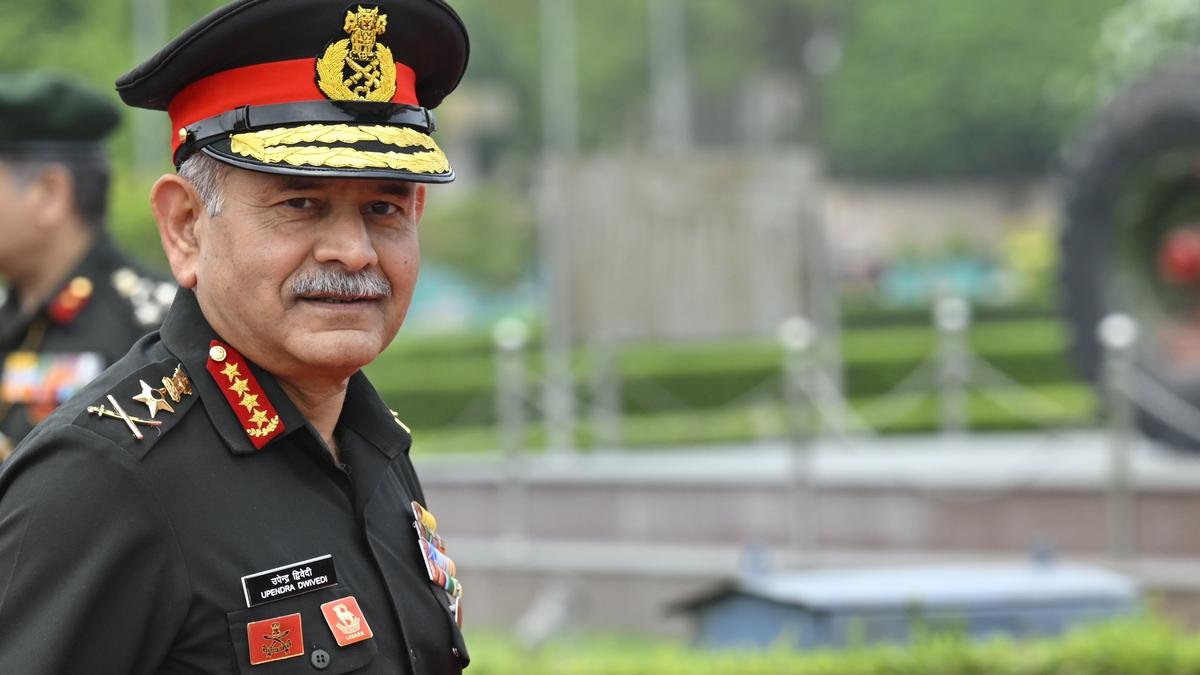
Indian Army Chief warns Pakistan after Delhi blast: Operation Sindoor was not the climax—it was just the trailer. And India’s Army chief has made it clear.
On November 17, 2025, India’s Army Chief General Upendra Dwivedi issued one of the strongest warnings in recent military history. Speaking at the Chanakya Defence Dialogue, he said that “Operation Sindoor”—the retaliatory strike conducted earlier this year—was merely a preview of India’s military capability. His words came just days after the Delhi blast, which killed several people and reignited concerns about cross-border terrorism.
With tensions high and public anger rising, the Army chief’s statement has become a defining moment in India’s counterterrorism posture.
The Army Chief’s Hard-Hitting Message
General Dwivedi’s message was clear and uncompromising:
“We are prepared for any circumstances in the future. If Pakistan gives us an opportunity, we will teach it how to behave responsibly with a neighbouring nation.”
This remark signals two things:
- India will not tolerate state-backed terrorism.
- The military is prepared for stronger, wider, and more decisive action.
According to the Army chief, talks and terror cannot go hand in hand. As long as Pakistan continues to shelter and fund terror groups, India will treat terror attacks not as isolated crimes—but as deliberate acts sponsored from across the border.
Operation Sindoor: The Trailer of What India Can Do
Launched on May 7, 2025, Operation Sindoor was India’s swift military response to the Pahalgam terror attack. The operation targeted:
- Terrorist camps in Pakistan-occupied Kashmir (PoK)
- Training facilities used by Lashkar and Jaish operatives
- Infrastructure aiding infiltration attempts
Notably, the operation lasted 88 hours, striking multiple locations with precision while avoiding civilian sites. Defence officials stressed that Sindoor was measured, restrained, and purposeful.
But General Dwivedi’s comment that it was merely “a trailer” implies:
- India’s full capability was not used.
- A larger, more aggressive operation is possible.
- Pakistan should not mistake restraint for weakness.
Why the Delhi Blast Changed the Mood
The shocking explosion near the Red Fort Metro station in Delhi—later linked to Pakistan-backed groups—has changed national sentiment. India’s security agencies have called it a coordinated act of terror, and the National Investigation Agency (NIA) is probing cross-border links.
The Army chief’s strong response shows that India’s patience is wearing thin. After years of terror strikes—from Uri to Pulwama to Pahalgam—India’s threshold for tolerance has dramatically decreased.
A New Strategic Posture: Zero Tolerance, Full Preparedness
India’s message to the world is becoming clear: Indian Army Chief warns Pakistan after Delhi blast
- Terror attacks will invite military retaliation.
- The response will not be symbolic—it will be damaging.
- Pakistan’s political instability or economic crisis will not shield it from consequences.
This marks a shift from earlier doctrines, which focused on diplomatic pressure. The new approach embraces:
- Pre-emptive strikes
- Quick-response cross-border action
- Unmanned aerial operations
- Precision targeting in PoK
Operation Sindoor was the first clear example of this evolving strategy.
Pakistan’s Reaction: Panic and Denials
As expected, Pakistan reacted sharply to the Army chief’s statement. Officials there have described India’s strikes as “provocative,” and have warned of retaliation. But internally, analysts believe:
- Pakistan fears escalation it cannot afford.
- Its economy is in crisis; its military is stretched thin.
- International support for Pakistan on terror issues has weakened.
By calling Operation Sindoor “a trailer,” India has increased pressure on Pakistan to rein in terror operatives.
Why This Message Matters Right Now
General Dwivedi’s warning carries weight because it comes at a time when:
- India is facing renewed attacks on home soil.
- Pakistan’s internal instability is rising.
- Global powers are urging both nations to avoid escalation.
The Army chief’s statement also serves as a deterrent signal to eliminate any miscalculation by Pakistan.
Indian Army Chief warns Pakistan after Delhi blast
Security experts believe a few developments are likely:
- Increased anti-terror operations along the border
- Intelligence-led targeting of terror networks
- Heightened military readiness in the western sector
- Political consultations on future responses
If Pakistan-backed groups launch more attacks, India’s next move may be:
- Larger military strikes
- Expanded targeting of terror infrastructure
- A prolonged, multi-day cross-border operation
With Pakistan’s political instability and economic collapse, any escalation could rewrite regional geopolitics.
Conclusion: Indian Army Chief warns Pakistan after Delhi blast
General Upendra Dwivedi’s warning is not just rhetoric—it is a statement of intent. Operation Sindoor was India’s message that terrorism will no longer be answered with diplomatic notes, but with military precision and decisive action.
If Pakistan-backed groups continue on their path, India has shown it is prepared to respond in a way that will leave no ambiguity about its strength or resolve. The Army chief’s words mark a turning point: India will not wait for tragedy; it will act to prevent it—and punish those who sponsor it.
FOR MORE BLOGS – beyondthepunchlines.com

Author: Team BTP

 Add to favorites